

Why do people in developed countries prefer to use paper for pop-up stores, exhibition booths, and visual displays?
By Shenzhen Topwon Group Co.,Ltd
Apr 17, 2026
If you often pay attention to international exhibitions or brand pop-up stores, you may notice that more and more international exhibition booths, temporary exhibitions and installation projects directly use paper-based materials as their main structural material.
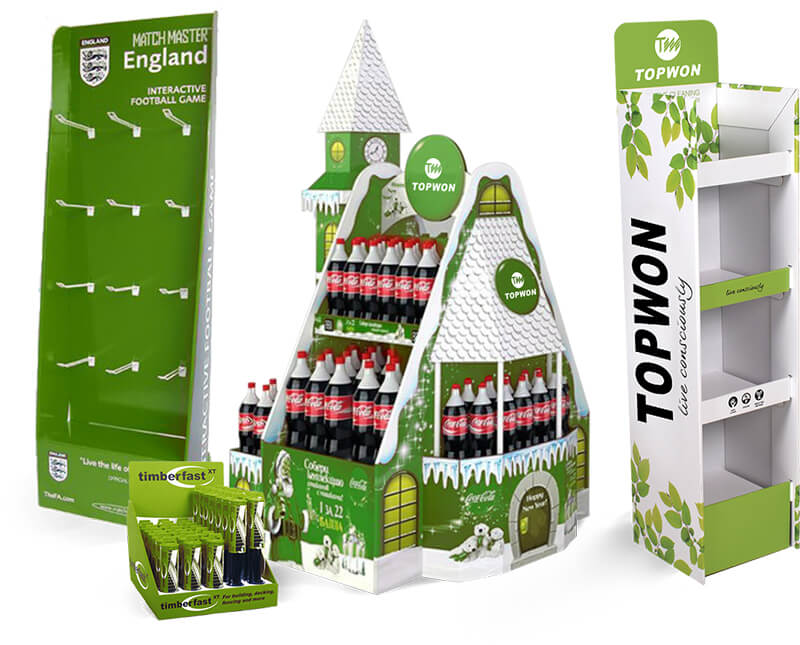
However, in China, many people often ask three questions when they hear about paper-based materials: Can it hold? Is it just an environmental gimmick? Is it the same as the material of corrugated cardboard express boxes? Today, we will talk about why people in developed countries prefer to use paper-based materials for booths on formal occasions.
Part 1: Flexible Cost, Not Just Low Price
1.1 Why Developed Countries Choose Paper-Based Materials for Cost
First, people in developed countries like paper-based materials not just because they are cheaper. They choose these materials because their cost is more flexible. Even when many brands in developed countries have enough budgets, they still choose paper structures actively. The cost advantage of paper-based materials does not lie in low prices, but in great freedom of choice.
For the same exhibition booth, you can hardly change traditional materials once you design them. But you can often adjust paper-based structures quickly within a few days in specific situations. The modular design helps you save transportation and construction labor costs. After use, you can reuse the paper-based structures. You can also recycle or recut some parts for the next exhibition. This way, you can reduce the total cost of attending exhibitions for a long time.
1.2 Cost-Saving Advantages of Paper-Based Booths
Many foreign brands, especially those in e-commerce, food and beverage, and new energy industries, care a lot about ROI. So paper-based booths become a good choice—they are both cost-effective and flexible.
Part 2: Aesthetic Recognition of Paper-Based Materials
2.1 Different Attitudes Towards Paper-Based Materials
When we did projects or released cases before, we often found a problem. Even if the structure was stable, the shape was beautiful and the material was good, customers would still ask first: “Won’t it look like a cardboard box?” But people in developed countries rarely have this worry when they look at such projects. They even let people see textures like corrugation and honeycomb on purpose. Paper is just paper, and they show the corrugation without hiding it.
In the eyes of people in developed countries, paper is exquisite and warm. It is a material that can show beauty and good design.
2.2 The Aesthetic Value of Paper in Developed Countries
However, more and more people in China accept paper-based materials now. Especially in cultural and creative exhibitions, environmental protection projects, pet exhibitions and educational spaces, many customers take the initiative to ask: “Can we make it with paper?” We don’t need to persuade them anymore.
Part 3: Trust in Reusability After Installation
3.1 The Demand for Reusability in Developed Countries
Many foreign brands attend exhibitions for a long time—several times a year. They can’t build a new booth every time. So they care a lot about one thing: Can we disassemble, transport and reuse this booth quickly for the next exhibition? If you design paper-based structures well and use a good modular design, you can reuse them many times. Paper-based structures are not heavy. You can replace their consumables easily, and their logistics cost is low.
For example, an international cardboard manufacturer makes a full set of paper-based booths for its customers. They design the booths to be used 10 times from the beginning. You can reuse them many times by replacing stickers and content cardboard each time, without changing the structure.
3.2 Example of Reusable Paper-Based Booths
Part 4: Safety Concerns About Paper-Based Materials
4.1 Is Paper-Based Material Safe for Public Spaces?
Finally, let’s talk about the safety issue that everyone cares about. People often ask: “Can we use paper-based materials in public spaces? Are they safe? Are they fireproof?”
Are they safe? Recently, an installation collapsed at the Shanghai Pudong Art Museum. A family of three was taking photos when the check-in wall on the third floor suddenly fell down and pinned the girl’s father. One person got hurt.
What if we made this check-in wall with paper-based materials? No material can guarantee 100% safety. But even if paper-based structures loosen or tilt a little because of human interference, their weight, material and force way will not hurt people seriously. Even if the cardboard falls down, it is like “a pile of paper hitting the ground”. It may scare you, but it won’t make you bleed.
So in some children’s activity spaces, interactive art installations and parent-child exhibition areas, paper-based installations are actually a safe material.
Are they fireproof? First, we need to make it clear: we don’t use “ordinary cardboard”. We use a structural paper material that has passed flame retardant treatment.
4.2 Is Paper-Based Material Fireproof?
People specially use this material for space construction. It is not only strong, but also has good fire resistance after professional tests. The so-called Class B1 is a common flame retardant grade in exhibitions and commercial spaces. It means that when the material meets an open flame, it won’t burn or drip quickly. People can control the fire easily, so it is safer.
So can we use paper-based materials in public spaces? (✅) Are they safe? (✅) Are they fireproof? (✅)
Safety is not a shortcoming of paper-based materials. You just need to put effort into their design. So the question is not “are paper-based materials safe”, but whether you use the right method, choose the right materials and find the right team.
Previous Article
What is a pop-up shop? Everything you need to know about short-term retail
Next Article
SIDEKICK Meaning&Definition
Trusted by These Featured Clients