

Scenario Upgrade, Technology Empowerment and Competitiveness Improvement: A Study on Retail Design for Sporting Goods Stores
By Shenzhen Topwon Group Co.,Ltd
Aug 03, 2026
I. Industry Status: Physical Stores Become Brand Breakthroughs amid Involution Competition
The sports goods industry has witnessed fierce competition and increasingly stratified consumption over the past few years. Nevertheless, revolutionary technological innovations are still absent, while online price wars keep escalating. Against this backdrop, numerous sportswear brands turn to offline channels for breakthroughs. By remodeling shopping scenarios and upgrading consumption experiences, they strive to showcase brand uniqueness at terminal retail points.
Beyond conventional channel layouts, brands further refine and match people, products and retail spaces, rolling out innovative thematic concepts, spatial designs and interactive formats constantly. Coupled with macro environmental shifts including sluggish luxury consumption and commercial real estate transformation, sportswear brands gain access to new territories for expansion. Far beyond basic retail functions, the term “physical store” has taken on richer implications nowadays.
In this special report series, we analyze major channel upgrading trends across the industry. Through these phenomena, we also aim to clarify how the market, consumers and brands transform and empower one another mutually.
II. Store Upgrade: From Retail Outlets to Core Hubs of Brand Ecosystem
Physical stores have evolved into all-encompassing, continuously evolving ecosystems. Serving as the core link connecting brands and consumers, stores are no longer mere sales venues. Instead, they function as hubs integrating brand storytelling, localized cultural integration, flash sales, live-stream shopping inside physical shops and other new retail models.
This trend is even more prominent among sportswear brands. Driven by demands for professional sports tech experiences, aesthetic design and tailoring perception, as well as offline community events, physical stores remain irreplaceable even amid China’s mature internet economy and e-commerce ecosystem. They have become vital leverage for sportswear brands to escape the vicious cycle of price competition and shrinking profit margins. Additionally, the rise of athletic lifestyle culture means sportswear stores, especially flagship locations, are more than physical spaces holding customers and merchandise. They are immersive sports and consumption scenarios crafted by brands for consumers.
III. Visual Attraction: Facade Design Creates the First Impression of Stores
Accelerating retail rhythms and homogeneous sports products make it necessary for sportswear stores to capture consumers who resonate with their styles and merchandise in the shortest possible time. Hence, store facades become a priority for brand refinement.
Some store facades feature three-story floor-to-ceiling glass walls, bright orange scaffolding and mannequins in diverse shapes, boasting highly fashionable styles that stand out clearly from over ten meters away. The design inspiration behind these facades strongly appeals to shoppers and subtly reinforces their perception of technological and futuristic aesthetics.
IV. Atmosphere Building: Materialize Brand Style via Details to Evoke Emotional Resonance
Facade design constitutes only one part of the scenario-based layout of sportswear stores.
In-store display arrangements, staff uniforms and consumption experiences further elevate retail ambiance and deliver immersive shopping experiences. Store attendants wear full sportswear sets to build a strong association with professional athletics.
Materializing brand values and styles through store layouts and staff attire represents one direction for the operational iteration of sportswear stores, with the ultimate goal of striking emotional chords with consumers.
V. Demand Adaptation: Scenario-Based Stores Align with Modern Consumption Concepts
In the era of material scarcity, consumers only required basic practical functions from goods. Today, with abundant even surplus supplies, shoppers adopt selective consumption mindsets. They seek products that are functional, match their athletic needs and carry exclusivity; products with added social attributes are even more desirable.
In other words, building scenario-based stores serves as a way for brands to display their identity. It helps attract consumer groups who share the brand’s values or are willing to embrace the lifestyle advocated by the brand. After establishing emotional bonds with these audiences, brands can drive sales growth accordingly.
Therefore, sportswear brands renovate and adapt stores around scenario-based design to accommodate structural changes in consumer demands. By cultivating unique in-store atmospheres, sportswear brands deliver integrated shopping experiences that combine brand temperament, product narratives and retail vibes, rather than disjointed, fragmented elements.
VI. Technology Empowerment: Dual-dimensional Upgrade of In-store Consumption Experience
Apart from immersive ambiance, technological elements are indispensable for delivering premium shopping experiences. This goal is achieved through two approaches: the application of technological tools, and the interpretation of proprietary brand technologies.
1. Deploy technological tools to boost interactive experiences
Advancements in technology allow stores to adopt digital screens, smart shelves, AI, AR, XR and other emerging technologies to bring stores, shelves and products to life. These tools can display product information and promotional activities in real time, embed virtual fitting functions, and strengthen interactions with shoppers.
Long shelves paired with full-height LED screens loop multi-angle wearing shots of different products, helping consumers gain intuitive product understanding. Wall-mounted compact shelves are also fitted with smaller LED screens. For example, stores roll out promotional footage for Nike football series and thin-soled sneakers currently on promotion, forming complete product stories across display zones.
Equipping shelves and displays with LED screens to boost dynamism and interactivity has become standard practice for offline sportswear stores in recent years.
Moreover, sportswear brands increasingly emphasize their comprehensive, robust technological systems. Brands that enable consumers to directly and clearly understand the functions and strengths of such technologies achieve higher sales conversion rates directly. For this reason, many flagship sportswear stores reserve empty space near main entrances to showcase their latest technologies.
2. Translate brand technologies to visualize product strengths
Subtle scene arrangements also help consumers intuitively perceive a brand’s technological capabilities, product functions and real-world applications. Through merchandise displays and installation exhibits, brands translate technical advantages into tangible experiences, enabling shoppers to quickly match suitable products based on their usage scenarios, tech preferences and athletic habits. This has become a mandatory practice for sportswear stores that pursue higher efficiency and sales per square meter.
VII. Core Value: Immersive Experiences Build Offline Core Competitiveness
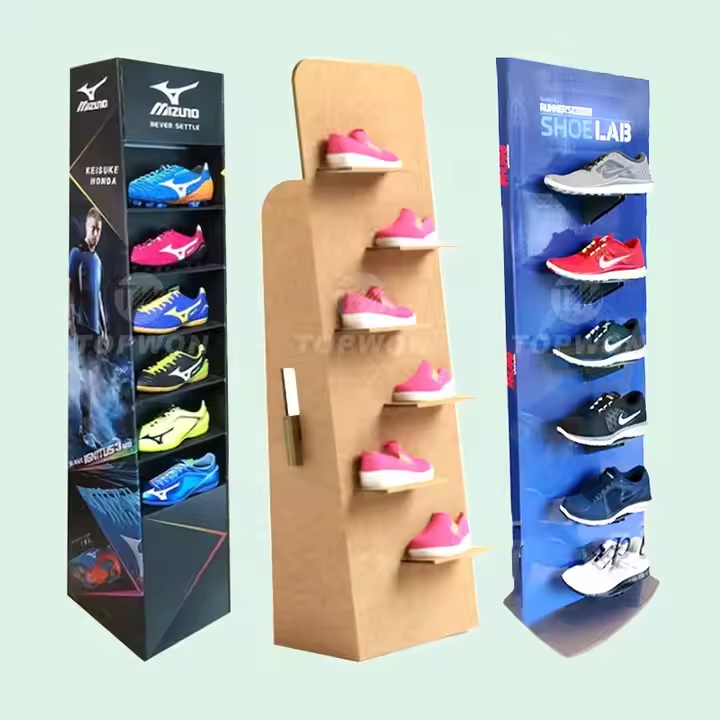
By refining atmosphere and technological elements, sportswear stores construct matching sports and lifestyle scenarios for consumers. Influenced by the in-store ambiance, visitors identify existing demands or generate new needs, driving additional purchases.
The former represents the basic function of physical stores, while the latter tests brands’ and stores’ insight into market trends, consumer demands, brand storytelling and sales training as well as their capability to communicate these insights effectively.
Adopting scenario-based retail to satisfy consumers’ explicit and latent demands is a strategic choice made by sportswear brands amid the current market landscape. Brands rely on physical scenario spaces to convey brand stories and values and stir shoppers’ emotions. While shopping, customers immerse themselves in professional sports and outdoor leisure atmospheres and gain multi-sensory experiences covering sight, sound, smell and touch. This shapes their shopping paths and purchase decisions, fostering deep emotional connections between consumers and brands.
Such immersive shopping experiences act as a powerful weapon for physical stores to compete with online platforms. They also explain why consumers are willing to pay a premium for offline shopping instead of choosing discounted online products, ultimately lifting store turnover and brand profits.
VIII. Conclusion
Against the backdrop of intensified involution and homogenization in the domestic sports goods industry, offline physical stores have completed a fundamental transformation from single sales venues to multi-dimensional brand ecological hubs. Driven by changes in consumer concepts and retail upgrading trends, sportswear brands optimize store competitiveness systematically from multiple dimensions including visual presentation, spatial atmosphere, scenario adaptation and technological empowerment. Through facade image shaping and detailed atmosphere building, brands realize the visualization of brand style and value recognition; through scenario-based layout iteration, they precisely fit the personalized, experiential and socialized consumption needs of contemporary consumers; through the dual upgrade of technical tool application and brand technology translation, they break the limitations of traditional retail and enhance interactive shopping experience and transaction efficiency. In essence, the immersive offline store experience has become the core barrier for sports brands to get rid of online price wars, differentiate brand positioning, and build sustainable market competitiveness, realizing the mutual growth of brand value, consumer stickiness and market benefits.
References
[1] Porter M E. Competitive Strategy: Techniques for Analyzing Industries and Competitors[M]. New York: Free Press, 1980.
[2] Kotler P, Keller K L. Marketing Management[M]. 16th ed. Beijing: Tsinghua University Press, 2020.
[3] China Chain Store & Franchise Association. China Offline Retail Industry Development Report 2024[R]. Beijing: CCFCA, 2024.
[4] Li Y, Wang H. Research on Scenario-based Retail Transformation and Consumer Experience Upgrade of Sporting Goods Brands[J]. Journal of Commercial Economics, 2023(12): 89-92.
[5] Zhang Q. Empowerment of Digital Technology on Physical Retail Space Innovation[J]. Modern Business Research, 2024(03): 112-115.
Previous Article
RFID Warehouse News Today: From Pilot Trial to Core Warehouse Infrastructure

Next Article
Customizable Service Counters for Stores: 3 Eye-Catching Checkout Designs to Raise Sales
Trusted by These Featured Clients