

What is a store display called
By Shenzhen Topwon Group Co.,Ltd
Jul 31, 2024

A store display is commonly called a retail display, display stand, or display rack. More specific names include floor display, counter display, PDQ tray, hook display, end-cap display, and pallet display.
The right name depends on the display’s structure, where it is placed, and what it holds. Displays used to promote merchandise where customers make purchasing decisions are also commonly described as point-of-purchase (POP) displays.
At TOPWON, we have 16 years of experience in cardboard POP displays and custom packaging. This guide explains common display names, shows how they relate to different retail settings, and connects them with our product collections and a published project example.
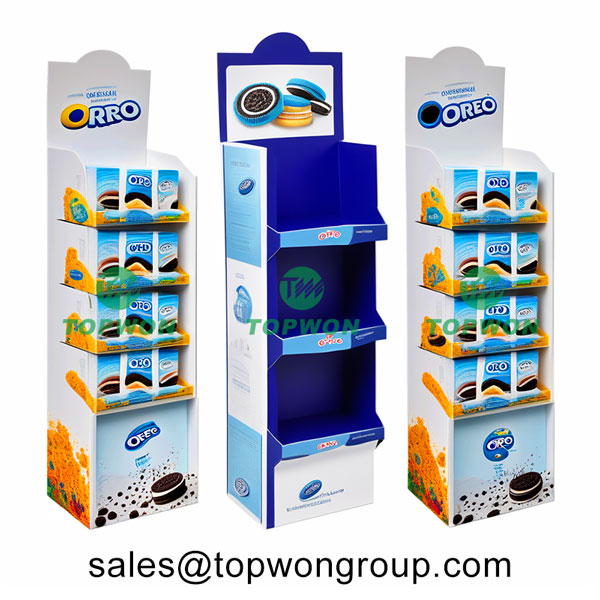
A display can have more than one correct name. For example, a “cardboard cosmetics counter display” describes its material, merchandise, and placement.
| Display name | What the name describes | Typical placement or use |
|---|---|---|
| Floor Display | A freestanding display placed on the floor | Retail aisles and designated promotional areas |
| Counter Display | A compact display placed on a counter | Checkout counters and service desks |
| PDQ Tray | A tray-style merchandising display | Shelves, counters, or a larger display system |
| Hook / Peg Display | A display fitted with hooks for hanging merchandise | Countertop or floor-standing arrangements |
| End-Cap Display | A display positioned at the end of an aisle | Supermarket and retail aisle ends |
| Sidekick / Powerwing Display | A narrow display attached beside a larger fixture | Sides of retail shelving or end-cap fixtures |
| Dump Bin | An open bin-style display | Promotional areas for suitable loose or individually packaged goods |
| Pallet Display | A display arranged on a pallet base | Larger retail promotional spaces |
TOPWON’s POP display collection includes these display categories, along with additional structures and industry-specific options.
What Do the Main Store Display Types Look Like?
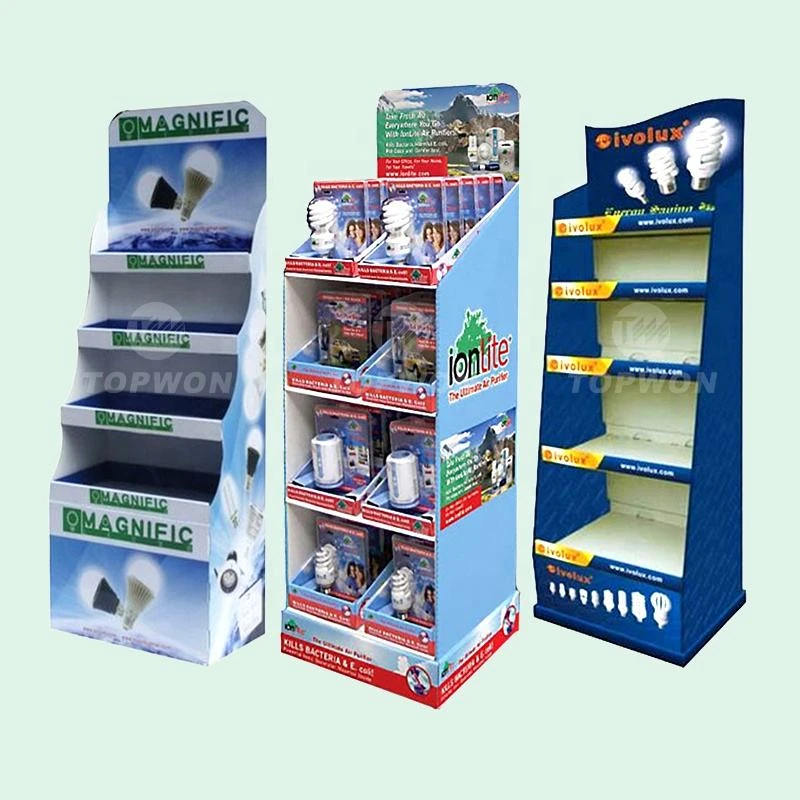
1. Floor Displays
A floor display is a freestanding fixture placed directly on the retail floor. Depending on the products, it may use shelves, compartments, hooks, or a combination of structures.
Use this name when describing a display that stands independently rather than sitting on a counter or attaching to existing shelving.
When planning a cardboard floor display, confirm the overall footprint, product weight, shelf arrangement, and intended retail location.
2. Counter Displays
A counter display is designed to sit on a checkout counter, service desk, or another raised retail surface.
It may use a simple tray, multiple tiers, divided compartments, or hooks. “Counter display” describes its placement—not one fixed structure.
Before choosing this format, check the available counter space, product dimensions, and the height of the assembled display.

3. PDQ Trays
A PDQ tray is a tray-style merchandising display used to organize and present products. Designs may include an open front, internal dividers, or a printed header.
Some PDQ trays work independently on a counter or shelf. Others form part of a larger merchandising arrangement.
TOPWON’s PDQ tray collection includes open-top trays, divided trays, and trays with display headers, with structures selected to suit the products and retail setting.
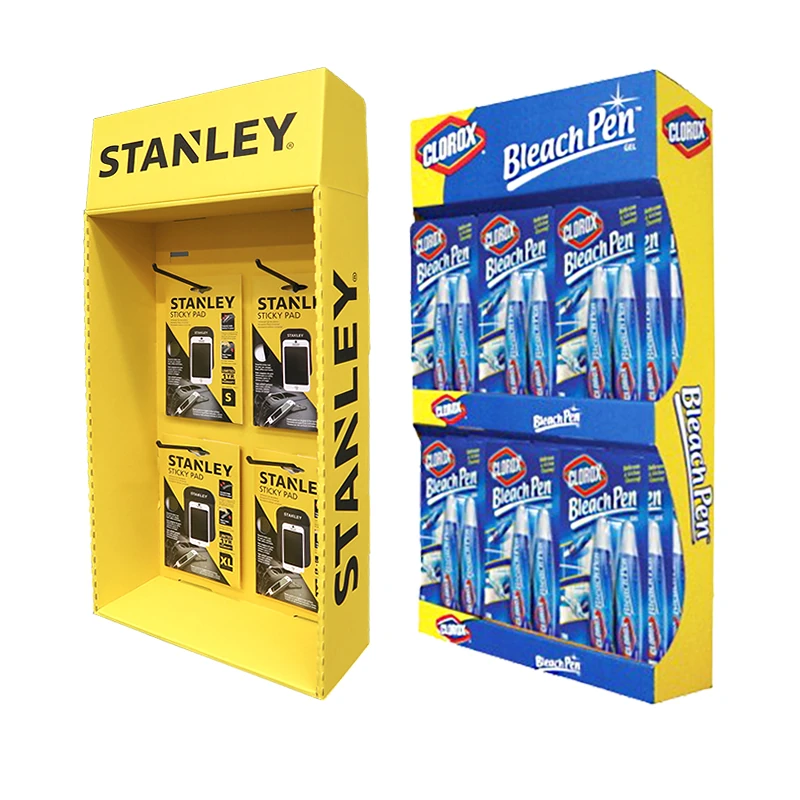
4. Hook or Peg Displays
A hook display presents products on hooks rather than supporting every item on a shelf.
This format requires packaging that can hang securely. The hook spacing, hook length, product dimensions, and total loading requirements should be checked together.
A hook display can also be described by its placement—for example, a “countertop hook display” or a “floor-standing hook display.”
5. End-Cap Displays
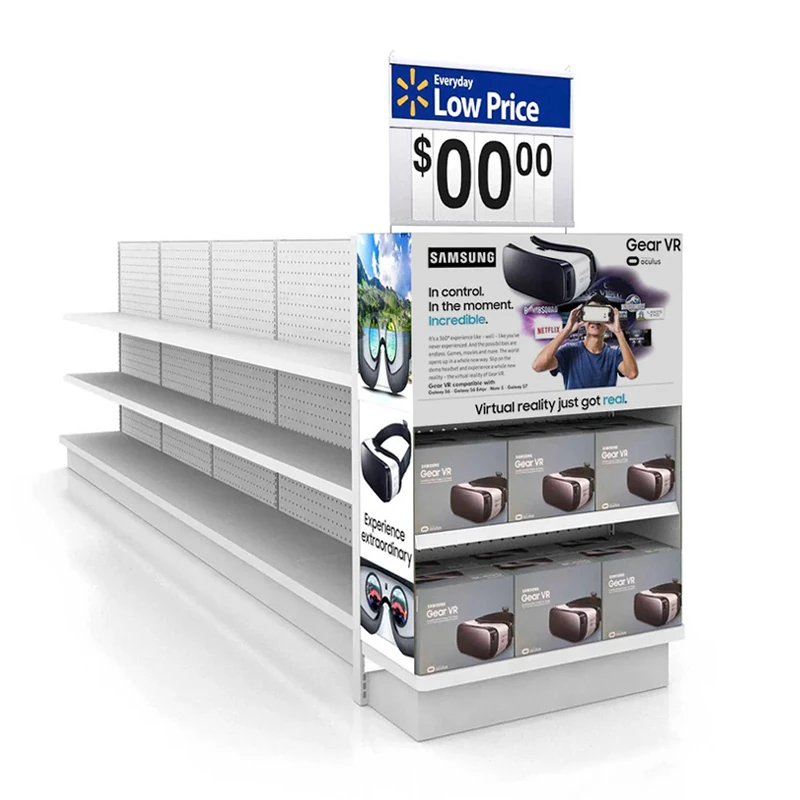
An end-cap display is positioned at the end of a retail aisle. Its name describes the location rather than a single material or construction method.
When requesting one, include the retailer’s available width, depth, height, and any fixture requirements.
TOPWON’s published case collection includes wine and beverage end-cap display projects, illustrating how this placement-based name can be combined with a product category.
6. Sidekick or Powerwing Displays
A sidekick, also called a powerwing display, is a narrow merchandising unit attached beside a larger retail fixture.
Its suitability depends on the attachment method, available space, product arrangement, and retailer requirements. Confirm these details before approving the design.

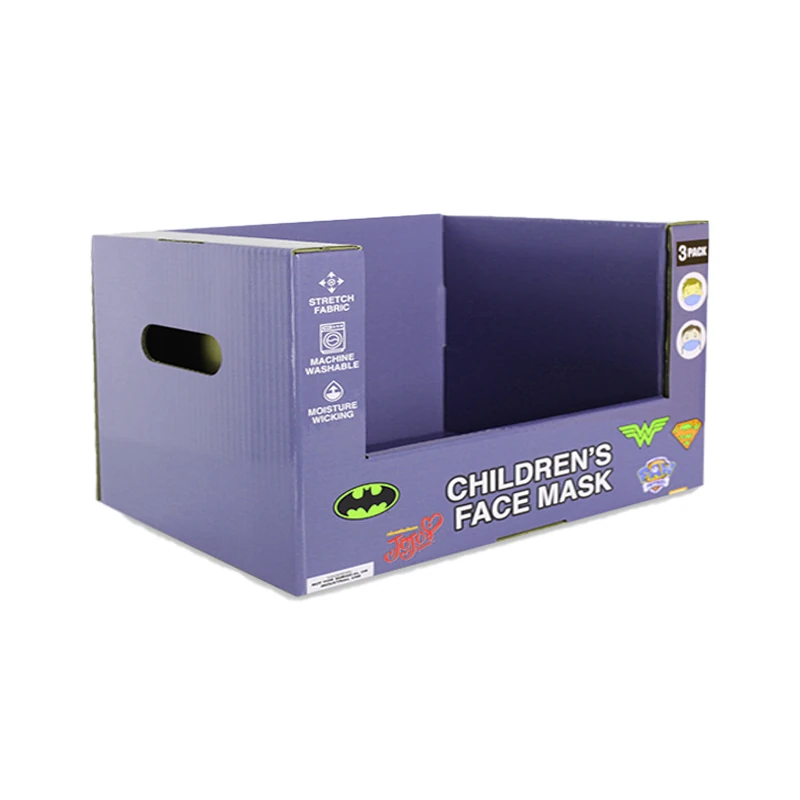
7. Dump Bins and Pallet Displays
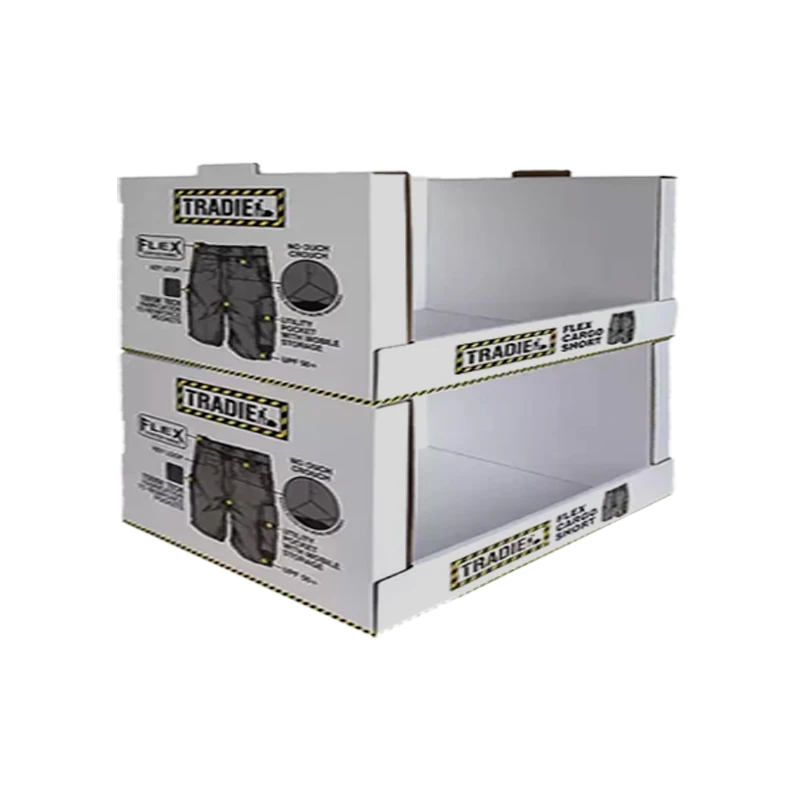
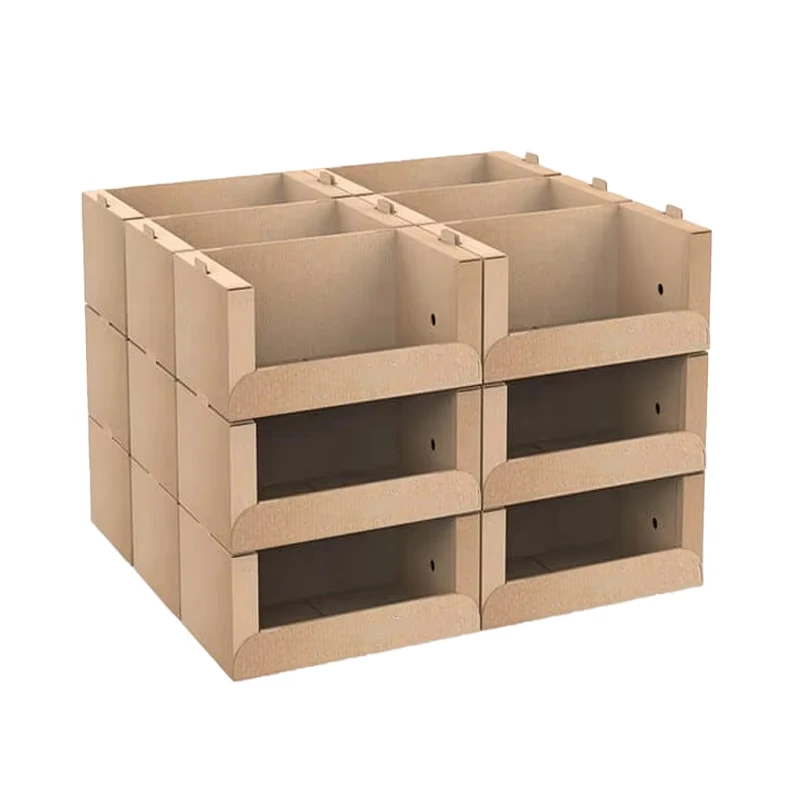
A dump bin is an open container-style display. A pallet display is arranged on a pallet base.
These names are not interchangeable: one describes a bin structure, while the other describes the display’s base and overall merchandising format.
For either format, confirm product access, loading requirements, the display footprint, and the store’s handling requirements.

What About Display Cases and Shelving?
“Store display” is a broad term. It can also refer to fixtures beyond cardboard promotional displays.
- Display shelving uses shelves to organize and present merchandise.
- Central display shelving describes shelving positioned in a central store area.
- A display case generally refers to a case-style fixture, often with an enclosure.
An open cardboard display stand should not automatically be described as an enclosed or secure display cabinet.
For example, a wine promotional display and a lockable liquor cabinet may hold similar merchandise, but they serve different requirements. Clarify whether you need product presentation, enclosed protection, restricted access, or a combination of these functions.
Store Displays Named by Product Category
Displays are also named after the merchandise they hold. These names help identify the application but do not fully define the structure.
| Product-based name | Common retail setting | What to clarify |
|---|---|---|
| Electronics Display Stand | Electronics stores and accessory shops | Product dimensions, packaging, and security needs |
| Wine and Beverage Display | Supermarkets, wine shops, and beverage retailers | Bottle weight, loading arrangement, and product support |
| Eyewear Display | Optical shops and accessory stores | Product support, contact surfaces, and presentation |
| Craft and Gift Display | Gift shops and souvenir stores | Assortment, compartments, hooks, or shelves |
| Stationery Display | Bookstores and stationery shops | Product sizes and organization requirements |
| Automotive Accessories Display | Auto parts stores and dealerships | Product weight and packaging dimensions |
| Plastic Products Display | Home goods and general merchandise stores | The products being displayed; the name does not identify the fixture material |
| Cosmetics Display | Beauty retailers and salons | Packaging sizes, product variants, and branding |
A more precise description combines the product category with the display format:
- Cardboard cosmetics counter display.
- Floor-standing electronics accessory display.
- Wine end-cap display.
- Stationery PDQ tray.
This gives a supplier a clearer starting point than “store display rack” alone.
A Real Example: A Two-Tier PDQ Countertop Display
Our two-tier cardboard PDQ countertop display project shows how several display names can describe one solution.
The Retail Requirement
The project involved a European retailer seeking a compact checkout-counter merchandising system.
The requested arrangement combined a two-tier corrugated display rack with separate divided PDQ boxes. It needed to accommodate small packaged merchandise and offer an option for hanging lightweight accessories.topwongroup
The Design Approach
The published project describes three connected features:
- A two-tier frame for organizing merchandise vertically.
- Pre-cut hook holes for optional hanging accessories.
- Separate single-layer PDQ boxes with divided compartments for organizing product variants and replacing stocked boxes.
The key point is the relationship between the components: the frame provides the overall countertop structure, while the trays organize merchandise within the display arrangement.
What Should This Display Be Called?
Depending on the context, it can be described as:
- A counter display, because it is placed on a counter.
- A two-tier display rack, because it has two display levels.
- A cardboard PDQ countertop display, because of its material and merchandising format.
The most useful name combines the details relevant to the buyer. In this case, “two-tier cardboard PDQ countertop display” communicates more than “store display.”
The project is a reference for discussing a similar solution—not a guarantee that the same structure will suit different products. Dimensions, materials, and loading requirements should be confirmed for each order.
Explore more examples in our retail display case study collection.
Is Display Packaging the Same as a Store Display?
Not always. A standalone display fixture and a packaging box perform different primary functions, although some designs combine them.
TOPWON’s custom packaging collection includes shelf-ready packaging and shippers. Our POP display collection also includes shipper display concepts that combine transit packaging with an in-store presentation format.topwongroup+1
When making an inquiry, clarify whether you need:
- A separate display that staff stock in the store.
- A product tray intended for direct shelf or counter presentation.
- A shipping pack designed to convert into a retail display.
If a pack needs to serve both shipping and display functions, discuss both sets of requirements before finalizing the structure.

How to Choose the Right Store Display
Start with the merchandise and the retail setting, rather than choosing a structure by appearance alone.
Prepare the following information:
| Information | What to provide |
|---|---|
| Product size | Packaged length, width, and height |
| Product weight | Weight per unit and intended quantity per shelf, hook, or compartment |
| Product assortment | Number of SKUs and how they should be grouped |
| Placement | Floor, counter, shelf, aisle end, or fixture side |
| Available space | Maximum display width, depth, and height |
| Intended use | Campaign duration, restocking needs, and handling conditions |
| Branding | Artwork, colors, logos, and promotional messages |
| Delivery format | Flat-packed, assembled, or product-loaded, subject to project confirmation |
| Retailer requirements | Any supplied fixture specifications or installation rules |
| Order details | Required quantity, destination, and target delivery date |
For cardboard displays, confirm the proposed structure and performance requirements with the supplier. Material selection, reinforcement, and loading arrangements should suit the actual products.
Frequently Asked Questions
What Is the General Name for a Store Display?
“Retail display” or “store display” is a useful general term. “Display stand” and “display rack” are also common, but a more specific name may describe the structure or placement more accurately.
Is a POP Display the Same as a Counter Display?
Not exactly. “POP display” describes a merchandising role at the point of purchase. “Counter display” describes where the fixture is placed. A counter display can also be a POP display.
What Are Cardboard Displays in Stores Called?
Depending on the structure, they may be called cardboard POP displays, corrugated displays, floor displays, counter displays, or PDQ trays. Adding the format makes the description more useful.
Can a Cardboard Display Hold Bottled Products?
Suitability must be confirmed for the actual bottle weight, quantity, structure, and handling conditions. Do not assume that a design suitable for lightweight packaged goods is also suitable for bottled beverages.
What Should I Send When Requesting a Custom Display?
Send us product dimensions, product weight, display quantity, intended placement, and a reference image if you have one. Include your order quantity, destination, and target delivery date.
Find the Right Display Format with TOPWON
You do not need to know the exact industry term before contacting us. You can get a practical starting point from a product photo, basic dimensions, and an explanation of where the display will be used.
Explore our:
- POP displays for structures and application categories.
- Custom PDQ trays for tray-style merchandising options.
- Custom packaging for packaging formats.
- Retail display case studies for published project examples.
- Alibaba storefront for additional product browsing and company information.
For a custom project, share your product details, intended retail placement, required quantity, and target schedule so we can discuss a suitable display format.
Related Products
-

32 hole lollipop display stand – SCD14436
-

Candy display counter HE-20025
-

Cardboard Bulk Candy Display HE-20047
-
Cardboard Candy Shelf Display Stand HE-20525
-
Cardboard Chocolate Display For Valentine’s Day HV-004
-
Cardboard Chocolate Surprise Egg Display Stand – SPD20252
-

Cardboard display for Fruit-flavored Candy – SCD15518
-

Cardboard easter candy display HE-005
-

cardboard floor fresh bread display stand – SCD15964
-

Cardboard hard candy display stand – SCD15512
-

cardboard Polo Shirt displays – SCD16123
-

childhood shirt cardboard displays – SCD13715
Previous Article
How to make a cardboard for hat display


Next Article
How to custom cardboard display stands
Trusted by These Featured Clients