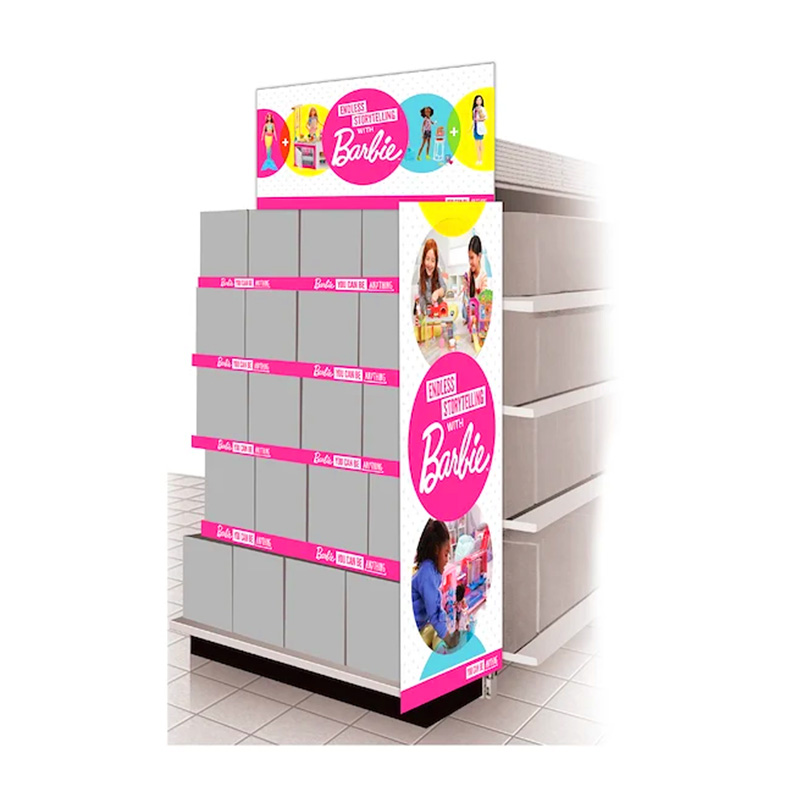
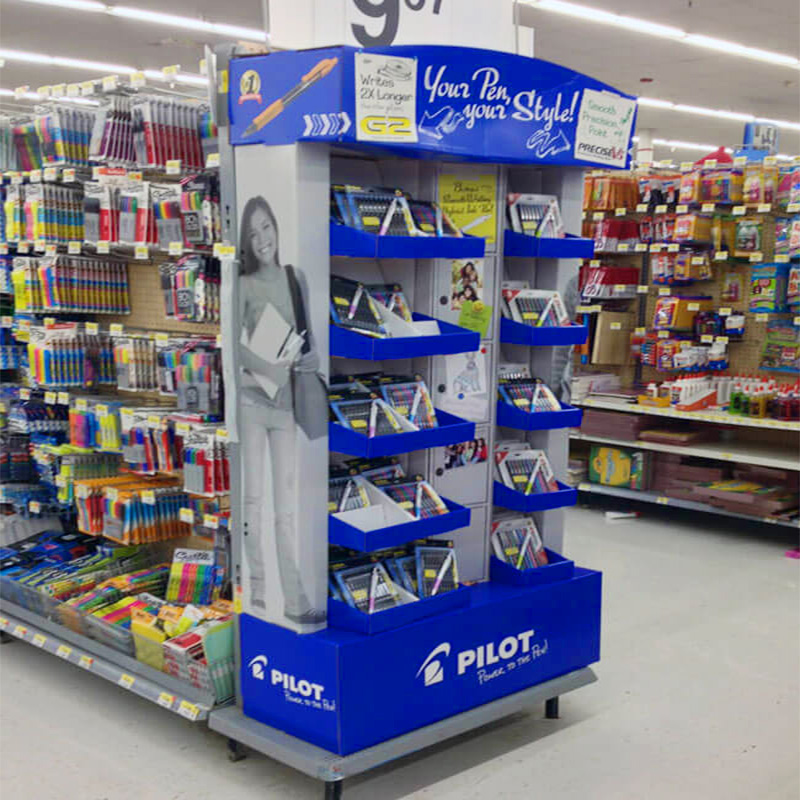
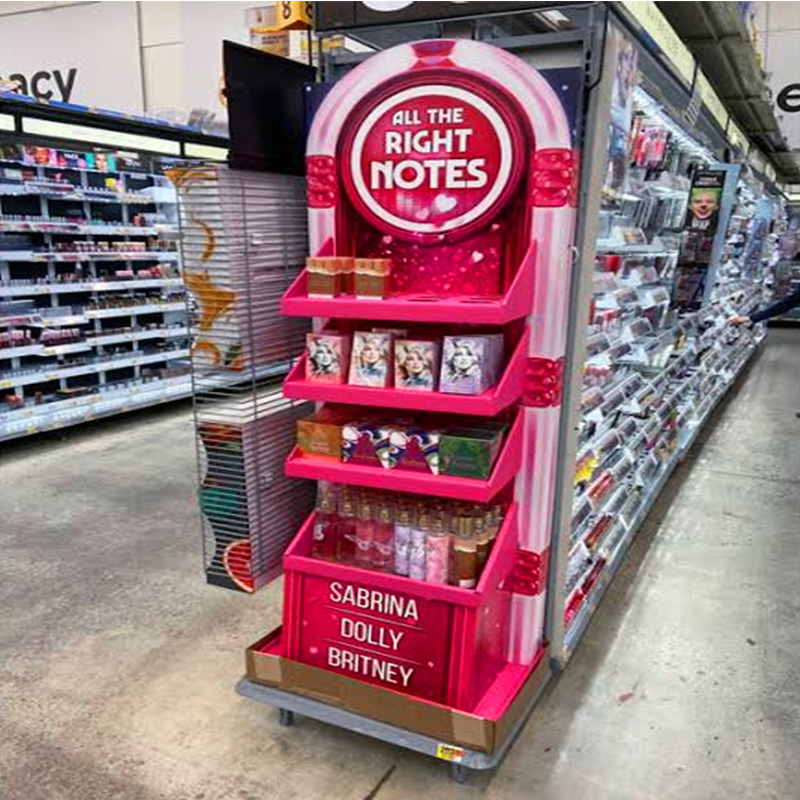
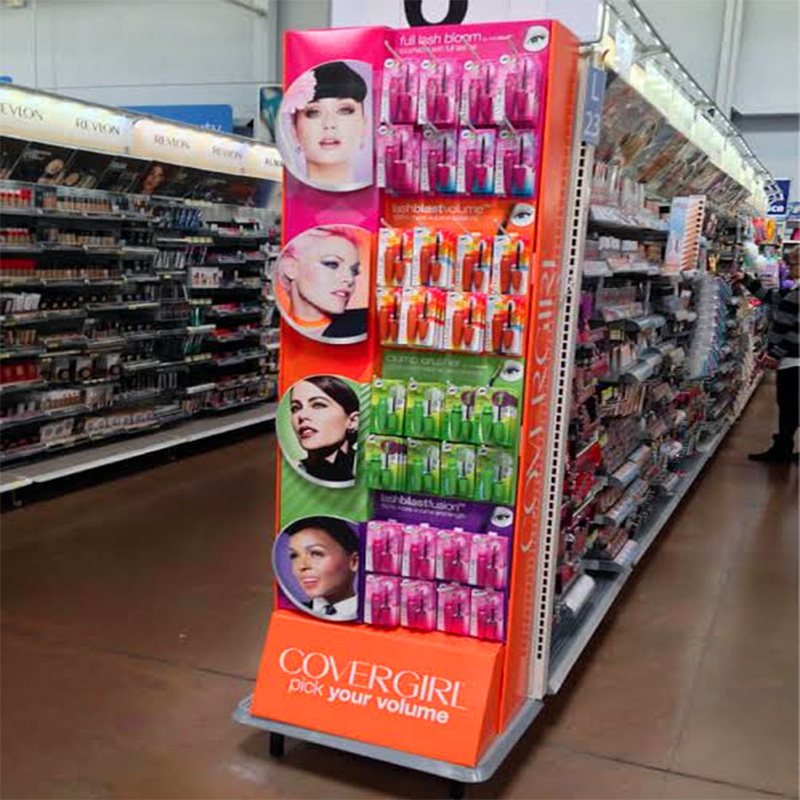
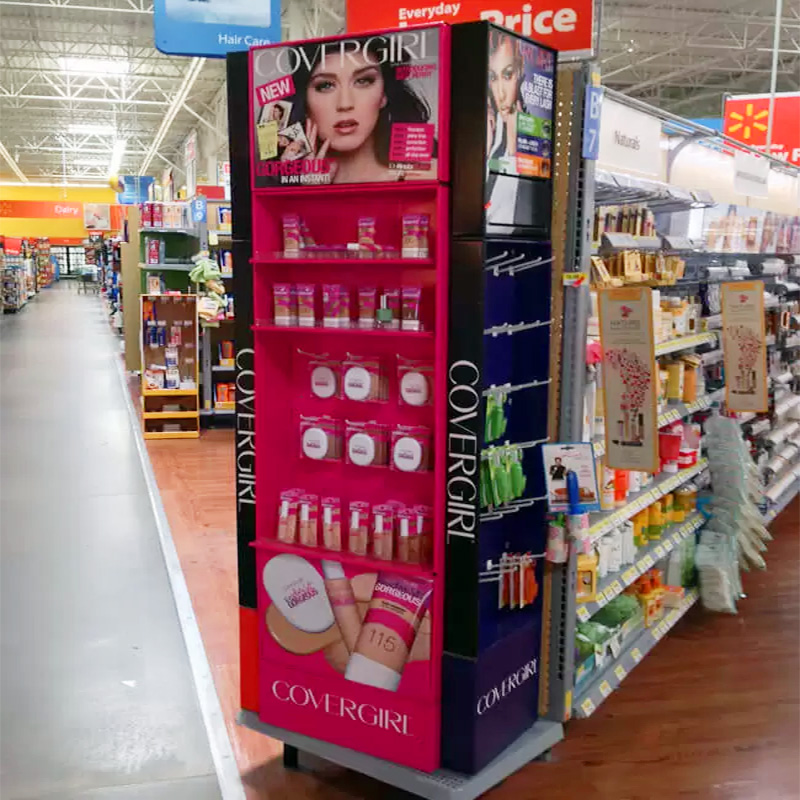
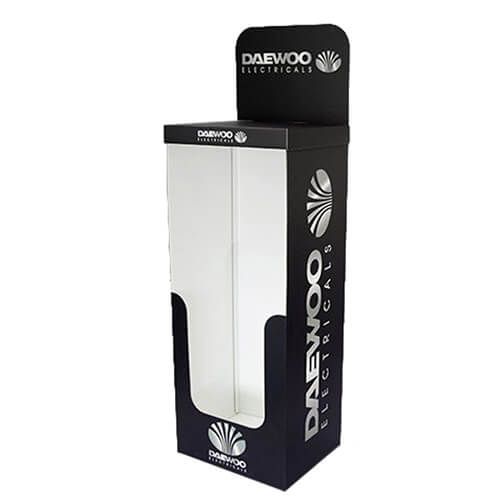
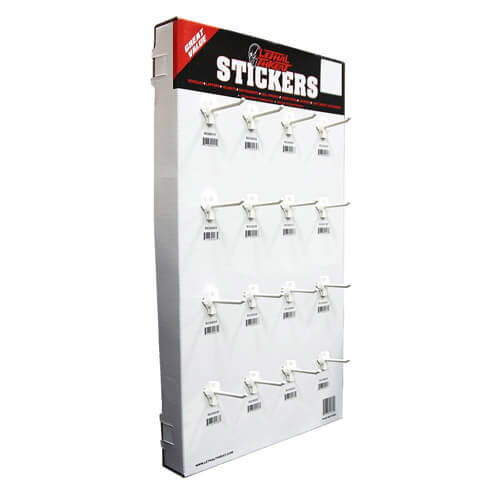
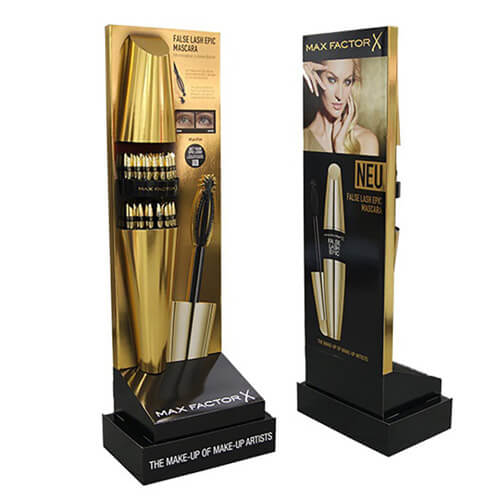
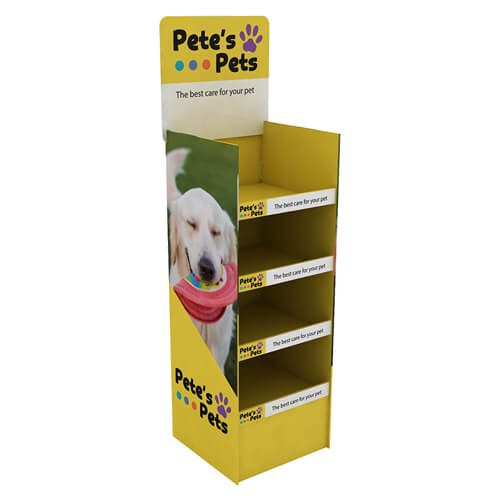
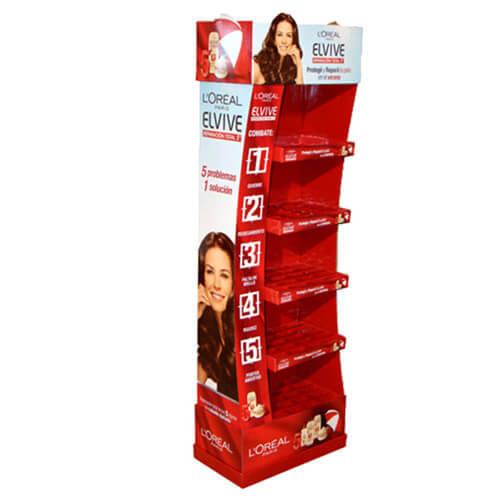
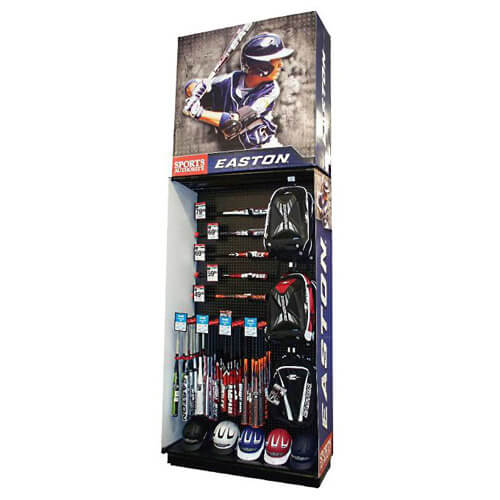
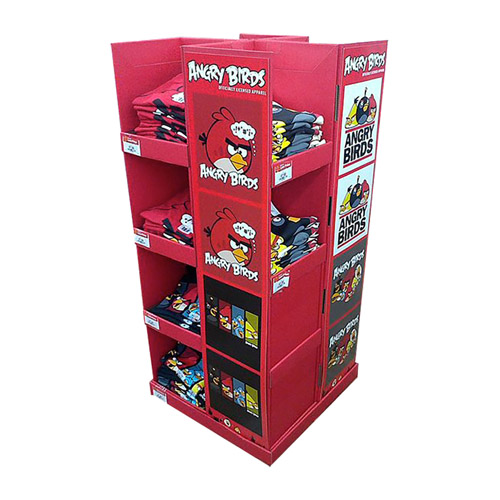
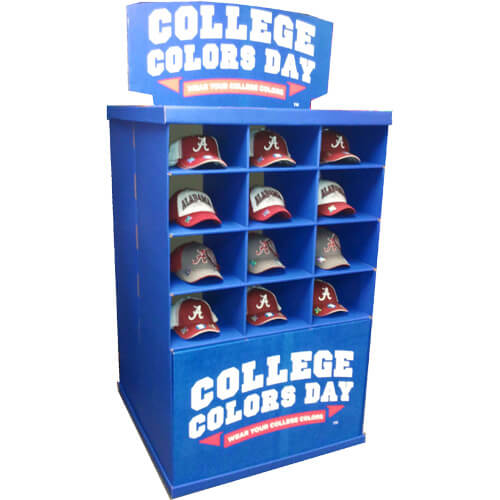
A grocery store end‑cap display rack sits at the start or end of shelf rows in grocery stores. It is a special display position mainly for promotional goods. It groups products together and draws customers’ attention.
In Grocery store food sections, an end‑cap is the front or rear part of a full shelf row. It is set where shoppers turn along walkways and is known as the prime display spot.
Stores usually place high‑profit items, new arrivals, promotional goods or slow‑selling clearance products on end‑caps.
People call corners and ends “golden corners and silver turns”. Shoppers can view goods here from three directions. So the end‑cap is a valuable spot to catch shoppers’ eyes in retail stores.
Typical Specifications
| Specification Item |
Standard Value |
Unit |
Remarks |
| Main Material |
Corrugated cardboard, coated paper, paper‑plastic composite |
– |
Paper‑plastic for higher moisture resistance |
| Overall Dimension |
1000 × 450 × 1800 |
mm |
Width × Depth × Height |
| Per‑layer Load Capacity |
8‑15 |
kg |
For normal grocery merchandise |
| Number of Shelf Tiers |
3‑6 |
tiers |
Adjustable shelf positions |
| Surface Treatment |
Glossy / matte lamination |
– |
Anti‑scratch surface protection |
| Printing Solution |
Full‑color CMYK offset printing |
– |
Custom brand artwork supported |
| Assembly Method |
Flat‑pack, tool‑free assembly |
– |
Easy on‑site installation |
Notes: All parameters can be customized.
Features of Grocery Store End‑Cap Display
Location Value
Shoppers almost always walk past end‑caps. Their eyes naturally fall on this area. Products get extremely high exposure. Compared with ordinary shelves, end‑caps turn more visitors into buyers and create more profit for each unit of space.
Product‑Selection Rules
Pick goods based on where the end‑cap is placed. For end‑caps near store entrances, place popular, cost‑effective drinks and daily snacks to attract incoming shoppers. For end‑caps near exits, choose high‑profit goods or new products to raise how much each customer spends.
Update goods with seasons and holidays. Promote drinks in summer and hot drinks in winter. Display mooncakes for Mid‑Autumn Festival and gift boxes for Spring Festival. Stores normally change end‑cap goods every two weeks to keep things fresh for shoppers.
Display Styles
Create a full‑stock look. Stores cut open cartons or use full boxes as bases to stack lots of goods. This gives shoppers the feeling of rich stock and good prices. This method works well for large‑size packaged food such as cartons of milk and drinks.
Arrange goods with clear layers. Stores often use pyramid‑style stepped stacking, wide at the bottom and narrow at the top, or use staggered shelves. This setup lets shoppers grab items easily and creates a neat‑looking display.
Visual Presentation
Build strong visual appeal. Place goods between 1.2‑1.6 meters high, which is the best viewing height for most people. Use bright‑colored products or brand theme colors, and shine spotlights on them to catch shoppers’ eyes within three seconds.
Keep product information simple and clear. Use eye‑catching price stickers and large price tags. Show promotions such as “Buy One Get One Free” directly. Do not mix too many different messages together.
Operation Logic
Group goods by real‑life usage scenes. For example, put coffee next to creamer and instant noodles next to ham sausages. Build small shopping scenes. This makes shoppers want to buy all matching items in one trip.
Application Scenarios
| Application Scenario |
Target Merchandise |
Core Marketing Goal |
Suitable Retail Environment |
| Supermarket Aisle End |
Snacks, beverages, packaged food |
Boost impulse purchase volume |
Large‑scale grocery supermarket |
| Grocery Store Checkout Zone |
Small‑size snacks, candy, accessories |
Increase last‑minute add‑on sales |
Community grocery store |
| Convenience Store Promotion Area |
New‑launch food, limited‑time offers |
Highlight new arrivals & promotions |
Urban convenience store |
| Seasonal Retail Pop‑up |
Holiday‑themed food & gifts |
Support short‑term seasonal campaigns |
Temporary retail event space |
Notes: Contact us for relevant industry case references.
Principles for Grocery Store End‑Cap Display
-
Clear Theme Choose goods and match product categories with clear goals. Let shoppers know what items you recommend and why. Focus on quality instead of quantity.
-
Profit Guarantee Include both traffic‑drawing goods and high‑profit items. All product types serve sales. Stores should value A/B‑class goods and also make good choices for C‑class goods.
-
Clear Priority Assign display space based on each product’s role. Let shoppers easily tell which items are key recommendations and which are supporting related goods.
-
Focus on Sales All displays serve sales. Make goods easy to see, easy to reach and easy to take. Keep displays full, beautiful and tidy. Never sacrifice sales just for fancy‑looking layouts.
Notes for Placing Goods on End‑Caps
-
End‑caps are key promotion zones. Do not leave empty spaces or out‑of‑stock gaps.
-
Keep end‑caps tidy, clean, full and nice‑looking.
-
As a general rule, show at most two kinds of goods on one end‑cap. Use vertical display. If the two products differ greatly in height, use horizontal display with larger items on top and smaller ones below.
-
Avoid tiny‑sized goods such as chewing gum, overly large goods, and fast‑turnover promotional printed‑label goods for end‑cap display, to prevent handling trouble.
-
Do not place soft‑packaged goods that cannot stand upright, or items with extra gifts, on end‑caps for better visual effects.
-
Goods shown on end‑caps should belong to similar product groups. This helps shoppers find what they want.
-
Change end‑cap products every two weeks. Rented end‑caps shall not be used longer than 28 days.
Core Commercial Value of Grocery / Supermarket Food‑Section End‑Cap Display
What core business value do these end‑caps bring?
-
They are great spots to turn visitor flow into sales. End‑caps sit at walkway ends or corners. They catch shoppers’ eyes and influence buying decisions. They draw passing visitors and turn them into buyers, greatly increasing sudden impulse purchases.
-
They work well for promotions and stock clearance. Promotional messages gather here. They create hot‑sale vibes and help sell overstocked or short‑shelf‑life goods, speeding up store capital turnover.
-
They offer perfect space for new‑product launches. New items get independent, noticeable exposure. Quick public feedback helps new products enter the market smoothly.
-
They improve shopping experience and build brand impression. A well‑designed end‑cap shows product features and brand ideas. It makes shopping fun and rewarding, and raises shoppers’ overall recognition of the store.
Summary
End‑caps are highly valuable display positions for grocery stores and supermarkets. Stores need to select proper goods, arrange displays neatly and rotate products regularly. Good
Cardboard end‑cap displays attract customers, run promotions, clear old stock and launch new items to raise store income. Meanwhile they improve shoppers’ experience and create win‑win results for both customers and retailers.