

How to Choose Materials for a Corrugated Display Stand
By Shenzhen Topwon Group Co.,Ltd
Feb 10, 2025
Choosing materials for a corrugated display stand depends on product weight, shelf load, display size, graphic requirements, shipping conditions and retail environment. The right specification helps the display remain stable, look professional and ship efficiently.
This guide explains how to select corrugated board, flute profiles, print finishes and reinforcement options for custom retail displays.
1. Information Needed Before Choosing Display Materials
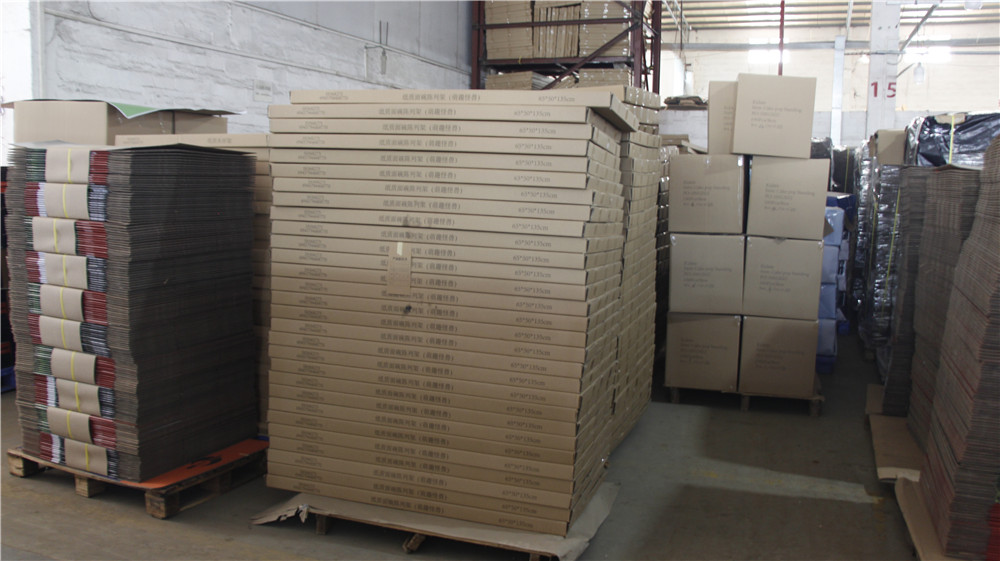
A corrugated display manufacturer needs the following information before recommending a board grade or flute combination:
- Product dimensions and unit weight
- Number of products on each shelf or tray
- Total product weight per display
- Display type, such as countertop display, floor display, dump bin, pallet display or sidekick
- Display height, width, depth and required shelf quantity
- Retail location and expected display duration
- Artwork requirements and required print quality
- Flat-pack or pre-assembled shipping requirement
- Destination country and transport conditions
- Sustainability, recycled-content or recyclability requirements
Product weight is only one part of the decision. A tall display with long shelves may require reinforcement even when the individual products are lightweight. A compact display carrying heavy products may require stronger shelf supports and a reinforced base.
2. Corrugated Board Structure
Corrugated board is the main material used for cardboard display stands. It is made from flat linerboard and a fluted corrugating medium. The linerboard forms the outer surfaces, while the fluted medium creates thickness, stiffness and cushioning.
Board performance depends on more than flute type. The final result is affected by paper grade, liner weight, adhesive quality, moisture level, die-cutting accuracy, shelf design and product-load distribution.
For detailed reference on common board thicknesses and flute combinations, see our corrugated cardboard thickness guide.
3. Single, Double & Triple Wall Corrugated Board
Single-Wall Corrugated Board
Single-wall board has one fluted layer between two linerboards. It is commonly used for lightweight and medium-duty retail display components.
- Countertop displays
- PDQ displays
- Shelf-ready trays
- Product dividers
- Header cards
- Lightweight floor displays
E flute, B flute and C flute are common single-wall options. The best choice depends on whether the project prioritises graphic quality, structural strength or cushioning.
Double-Wall Corrugated Board
Double-wall board has two fluted layers and three linerboards. It provides more rigidity and support than single-wall board and is often used for heavier or larger retail displays.
- Heavy-duty floor displays
- Multi-shelf displays
- Display bases
- Long shelf spans
- Pallet displays
- Internal supports and reinforcement panels
BC flute is a common double-wall construction for floor displays because it combines the structural benefits of B flute and C flute. EB double-wall board can be used when a project requires stronger support together with a smoother surface for printed graphics.
Triple-Wall Corrugated Board
Triple-wall board is generally used only for very heavy products, unusually large display structures or demanding transport conditions. In many cases, a double-wall board combined with properly designed internal supports is a more efficient solution.
4. Choosing the Right Flute Profile
Flute profile affects board thickness, print surface, cushioning and structural performance. Actual thickness may vary by paper grade, board supplier and moisture condition.
| E flute | About 1–2 mm | Counter displays, cosmetic displays, headers and premium graphic panels | Smooth printing surface, but may need reinforcement for heavy loads |
| B flute | About 2.5–3 mm | Retail trays, dividers, countertop displays and many floor-display components | Balances structural performance and printability |
| C flute | About 3.5–4 mm | Larger panels, selected floor displays and shipping-related components | Offers more thickness and cushioning than B flute |
| A flute | About 4.5–5 mm | Larger structures and applications requiring more cushioning | Thicker profile and less suitable for detailed direct printing |
| BC double wall | About 5.5–7 mm | Heavy-duty floor displays, bases, shelves and pallet displays | Suitable for stronger structures, but increases material and shipping volume |
| EB double wall | Varies by board grade | Premium floor displays requiring print quality and additional strength | Combines a fine flute surface with stronger structural support |
When to Use E Flute
Choose E flute when the display requires detailed graphics, clean die-cutting and a refined retail appearance. It is commonly used for cosmetics, skincare, small electronics accessories, pharmacy products and countertop displays.
For a larger or heavier display, E flute can be used on visible printed panels while stronger board is used for the base, shelves or internal supports.
When to Use B Flute
Choose B flute for general retail displays that require practical strength and acceptable printing quality. It is widely used for shelf trays, countertop displays, product dividers and medium-duty floor displays.
When to Use C Flute
Choose C flute when the structure requires more thickness or cushioning. It can be suitable for larger display panels and selected floor-display structures, especially where high-resolution graphics are not the main priority.
When to Use BC Double-Wall Board
Choose BC double-wall board for larger or heavier displays with multiple shelves, long shelf spans or demanding transport conditions. It is commonly used for bases, load-bearing shelves and internal structural supports.
Board thickness alone does not guarantee display strength. The base size, shelf design, support positions and product-load distribution must also be reviewed during structural sampling.
5. Select Materials by Display Type
Countertop Displays
Countertop displays are usually designed for lightweight products and limited retail space. E flute is suitable for premium graphics and small displays, while B flute may be more appropriate for displays carrying more products or using deeper trays.
Floor Displays
Floor displays require a stable base, sufficient shelf strength and resistance to repeated customer handling. B flute, C flute or BC double-wall board may be selected depending on display size and product load.
Many floor displays use different materials in different areas: stronger double-wall board for the base and shelf supports, with E-flute laminated panels for customer-facing graphics.
Dump Bins
Dump bins must handle uneven product loading and frequent customer interaction. Use a strong base, reinforced side walls and board suitable for the total product weight. Larger dump bins may require double-wall board or internal reinforcement.
Pallet Displays
Pallet displays carry a larger quantity of products and must withstand warehouse handling, transport and retail placement. Material selection should consider total load, pallet dimensions, base reinforcement, outer packaging and transport stability.
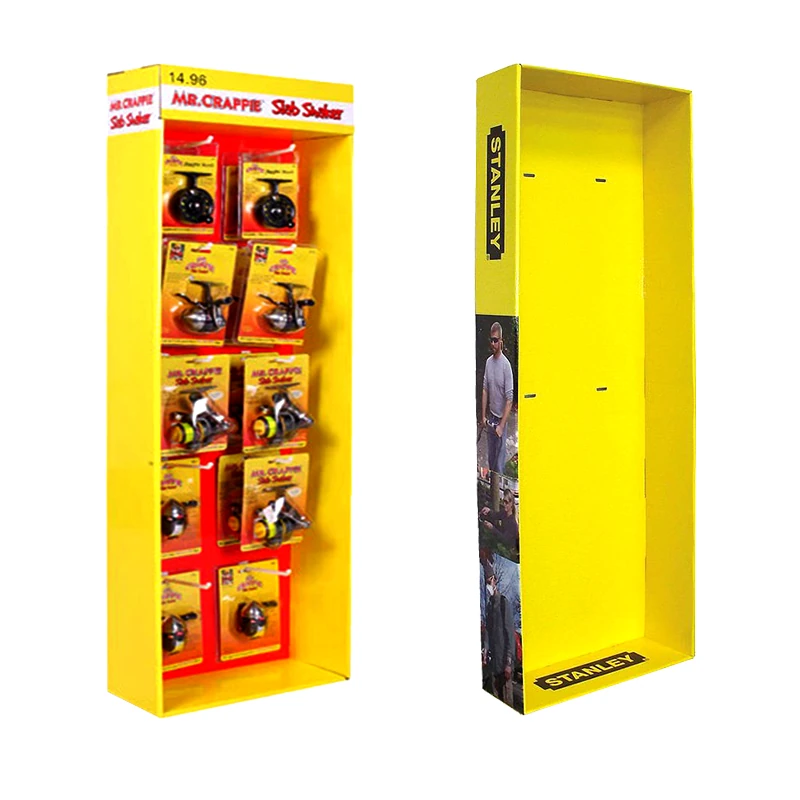
Sidekick and Hook Displays
Sidekick displays need strong hanging points and stable backing panels. The display may require reinforced die-cut holes, double-layer board, plastic clips or metal hooks depending on the product weight.
6. Printing, Lamination and Surface Finish
Material selection also affects the final retail appearance. The printing method and surface finish should match the artwork, brand requirements, order quantity and budget.
Direct Flexographic Printing
Flexographic printing applies ink directly to corrugated board. It is suitable for bold graphics, simple logos, large text and cost-sensitive production runs.
Offset Printing and Litho-Lamination
Offset printing is suitable for high-resolution graphics, product photography, small text and strict colour requirements. The printed paper sheet is laminated onto corrugated board to create a premium retail surface.
Learn more about how lamination works for cardboard displays, including the role of printed paper, corrugated board and surface finishing.
Surface Finish Options
Common finish options include gloss lamination, matte lamination, water-based varnish, UV varnish and anti-scratch coating.
- Gloss finishes can make colours look more vivid.
- Matte finishes can create a more premium, low-reflection appearance.
- Protective coatings can reduce surface scuffing during shipping and store handling.
Finish selection should also consider folding performance. The coating, printed sheet and crease settings must work together to prevent cracking at fold lines.
7. Reinforcement Options for Heavy Products
Using thicker board across the entire display is not always the most efficient solution. Targeted reinforcement can improve load capacity while controlling board usage, cost and shipping volume.
Common reinforcement options include:
- Double-wall board for shelves and bases
- Folded corrugated support columns
- Internal shelf braces
- Layered corrugated pads
- Honeycomb paperboard inserts
- Reinforced back panels
- Plastic clips or connectors
- Metal hooks for hanging products
- Metal or plastic tubes for special structural requirements
For example, a long shelf may benefit more from an internal folded support beneath the shelf than from increasing the thickness of every visible panel.
8. Shipping, Assembly and Retail Conditions
Material choices affect shipping cost, assembly time and display performance in store.
- Thicker board can increase carton size and freight volume.
- Too many loose components can make store assembly difficult.
- Humid environments can reduce corrugated board stiffness.
- Long retail campaigns may require stronger shelves and more durable surface finishes.
- Displays that are moved after assembly need a stable base and reliable locking structure.
The goal is to select materials that meet the required load, appearance and transport performance without adding unnecessary weight or complexity.
9. Material Checklist Before Requesting a Quote
Provide the following information when requesting a custom corrugated display quotation:
- Product dimensions and unit weight
- Number of products per shelf
- Total quantity per display
- Display dimensions and number of shelves
- Artwork files or branding requirements
- Required print finish
- Retail location and campaign duration
- Flat-pack or assembled shipping requirement
- Shipping destination and required delivery date
- Retailer guidelines, if applicable
- Recyclability or recycled-content requirements
This information helps the manufacturer recommend a suitable board construction, flute profile, printing process, reinforcement method and packing solution.
10. From Material Selection to Production
After the board specification, structural design and artwork are approved, the display moves into sampling, printing, die-cutting, assembly, quality inspection and packing.
For the complete production workflow, see our cardboard display stand manufacturing process.
For project planning, sampling and production scheduling, see our custom cardboard display manufacturing lead times.
11. Frequently Asked Questions
What is the best material for a corrugated display stand?
The best material depends on product weight, display size, shelf span, graphic requirements and retail conditions. E flute is often used for lightweight premium displays, B flute is suitable for many general retail displays, and BC double-wall board is commonly used for larger or heavier floor displays.
Is E flute strong enough for a floor display?
E flute can be suitable for lightweight floor displays or visible graphic panels. Heavy shelves and larger structures may require B flute, C flute, BC double-wall board or internal reinforcement.
What is the difference between B flute and C flute?
B flute is generally finer and is commonly used when a display needs a balance of strength and printability. C flute is thicker and may provide more cushioning and board thickness. The correct choice depends on the display structure and product load.
When should I use double-wall corrugated board?
Consider double-wall board for heavy products, tall floor displays, multiple shelves, long shelf spans, pallet displays or demanding transport conditions.
Does thicker corrugated board always make a stronger display?
No. Strength also depends on board grade, liner weight, shelf design, reinforcement, product-load distribution, base structure and assembly quality. A better structural design can improve performance without increasing the thickness of every component.
Need Help Selecting Corrugated Display Materials?
Send us your product size, unit weight, quantity per display, display dimensions, artwork requirements and shipping destination. TopWon can recommend a suitable board specification, flute profile, printing method, reinforcement approach and flat-pack solution for your custom corrugated display project.
Previous Article
Corrugated display racks in schools
Next Article
Difference between color box and boutique box
Trusted by These Featured Clients