
Wall Display Rack With Hooks Case Study for Supermarket Daily Goods Wall Mounted Display
Project Overview
We work with a large daily goods retail company that runs supermarkets in the US. We signed a Non-Disclosure Agreement (NDA) together. So we will not reveal their company name, brand logos, unique product details or store information in this document.
All renderings, display pictures and product drawings in this case are standard sample materials. They are not the customer’s real goods, real racks or real store scenes. We only use these pictures to show our full customization process and production skills.
We make custom corrugated wall racks with hooks for supermarket daily goods. Supermarkets hang these racks on empty walls to hold small daily supplies, such as cleaning gadgets, small home accessories, portable daily goods and packed tiny products.
Compared with counter racks, wall racks take up zero counter space inside stores. They arrange goods neatly, let customers see products easily, and help supermarkets sell more small daily items.

Our sales specialist Jessica follows this whole project alone from the very start to the end. She handles inquiry communication, demand confirmation, quotation making, structure design, sample testing, customer sample approval, mass production, quality inspection, packing and shipment. We make paper display racks following standard rules. This US customer is fully satisfied with the final finished goods.
Full Project Timeline (Jessica takes charge of all work)
Step 1: Receive customer inquiry and talk about basic project demands
On January 7, 2026, sales assistant Jessica gets a custom inquiry from this US supermarket customer. The customer wants corrugated wall racks with hooks to place small daily goods in their American stores.
The customer tells Jessica many problems of their old display way. Small daily goods pile up randomly without special racks. Messy counters make stores look ugly, stop shoppers from picking goods easily and cut sales. They need light, wall-hung and cost-effective paper display racks to improve store layout.
Jessica learns all their demands fully by considering US supermarket operation rules, local display standards and ocean shipping conditions. She confirms key points: racks must hang on walls, many hooks fit different small goods, space left for brand printing, light but tough paper for long-term supermarket use.
She also writes down their wanted sizes, hook quantities, total order amount, budget and delivery rules. She explains our full custom service for foreign paper racks, material strengths and overseas after-sales support, and locks the core plan of this project.
Step 2: Finish custom plan, test structure safety and send official quotation
On January 8, 2026, Jessica cooperates with the engineering team to test if the rack structure fits US supermarkets and light daily goods.
These racks hang on walls and carry goods for a long time, so we use fully reinforced frames and one-piece weight-bearing hooks. We pick tough corrugated paper. This material stops racks from bending or dropping goods after long use. The whole design stays light for easy hanging, holds goods steadily for daily store use and long ocean shipping.
Jessica makes a complete custom plan based on the customer’s product types, size demands, printing styles, rack structures and order quantity. The plan writes clear rack strengths, material parameters, display benefits and features matching US supermarkets. She sorts all costs into clear parts and sends an official foreign trade price list for the customer to check.
Step 3: Customer approves the plan and quotation, collect materials and start exclusive design
On January 9, 2026, this US customer reads our plan and quotation. They recognize the suitable design and fair price, decide to cooperate, and we move into the design stage.
Jessica follows the NDA strictly. She collects the customer’s brand logos, color standards and printing layout requests safely, and keeps all files confidential all the time. She sends all materials to the design team to draw exclusive rack frames and pattern layouts.
Jessica sets clear design standards: match wall sizes used in US supermarkets, spread hooks evenly, divide weight-bearing areas reasonably, keep simple and high-end styles to fit American stores, install without complex tools, and hold large batches of small daily goods well.
Step 4: Complete all design drawings and 3D renderings, get customer’s final approval on drafts
On January 11, 2026, our design team finishes all production files, including precise die-cut drawings, flat structure blueprints, size tables, wall-mounted installation guides and clear 3D renderings.
Jessica checks every detail one by one: rack frames, hook distances, overall sizes, printing areas and wall-mounted structures. After confirming no mistakes, she sends the full set of files to the US customer online for review.
The customer puts forward small revision suggestions to make racks fit North American supermarket styles better. Jessica tells designers to adjust hook density and wall stress points right away. The revised racks hold more goods and hang more stably. After revision, the customer signs to confirm all drawings and sets the unified standard for mass production.
Step 5: Factory makes blank test samples and carries out structure & weight tests
On January 13, 2026, all design drawings are finalized. Jessica arranges the factory to make unprinted blank samples strictly following final sizes and frames.
After samples are ready, we run full tests for US supermarket wall use and ocean shipping: wall hanging balance tests, multi-hook weight load tests, long-term anti-bending tests and easy installation tests. We find and fix hidden problems such as loose frames, uneven hook stress and slanted hanging.
Jessica follows the whole sample-making and testing process, records all test data, adjusts local reinforced parts and improves wall stress points. She makes sure racks stay firm and durable, and perfectly fit high-frequency daily use and cross-ocean transport in US supermarkets.
Step 6: Produce full-color finished samples, customer confirms samples online as mass production standard
On January 15, 2026, all blank structure tests pass. The factory does full-color printing, precise cutting and gluing assembly to make complete finished samples.
Jessica checks printing color accuracy, picture clarity, neat words, flat paper surfaces, strong hooks and wall-matching performance carefully. She guarantees no flaws, color differences or uneven frames, and all samples meet custom standards.
Then Jessica sends sample photos, short detail videos and test reports to the US customer online. The customer praises the rack display effect, stable structure and nice appearance. They officially confirm these samples as the only production standard for all bulk goods.
Step 7: Customer places mass production order, Jessica sends official factory work order
On January 17, 2026, the US customer confirms samples are perfect and places a large mass production order.
Jessica double-checks all information: total order quantity, custom sizes, printing styles, reinforcement standards, wall rack frames, foreign trade packing rules and delivery deadlines to avoid any mistakes. She sends official work orders to production and quality inspection teams, unifies production standards, clarifies requirements for every step, and tracks production progress all the time.
Step 8: Standardized mass production + multi-layer random quality inspection
From January 18 to 23, the factory produces all racks strictly following approved samples and drawings. Complete production steps include corrugated paper cutting, full-color printing, precise die-cutting, reinforcement gluing, hook shaping, wall frame strengthening and finished product trimming.
During production, Jessica visits the workshop every day and sends real-time factory photos and videos to the customer, so the customer knows order progress at any time.
Our quality inspection team picks random goods from every batch for multi-angle tests: size accuracy, consistent printing colors, hook weight limits, stable wall frames and flat folded surfaces. We throw away all broken or flawed goods to guarantee bulk goods match sample standards, and meet US supermarket import and in-store quality rules.
Step 9: Final full inspection of finished goods, fold and pack to prepare shipment
On January 24, 2026, all racks finish production. Jessica carries out a full final inspection. She counts all products, checks appearance, printing and structures, and confirms every rack reaches standards.
To fit long ocean shipping between China and the US, stop racks from breaking under heavy cargo and cut the customer’s logistics costs, we fold every rack flat, wrap them with moisture-proof and pressure-resistant foreign trade packing materials, and put them into tidy cartons. We also put simple Chinese-English installation guides inside each box for fast assembly in US stores.
Step 10: Arrange international logistics for shipment and send full shipping documents
On January 25, 2026, after inspection and packing finish, Jessica cooperates with professional international logistics teams. We finish container loading, weight checking and customs clearance for sea shipment.
She sends the sea tracking number, complete packing list, shipment photos, estimated arrival time and overseas receiving & installation tips to the customer right away, so the customer can track cargo status anytime.
Step 11: Customer receives and checks goods, wraps up the project and sorts all document files
On February 2, 2026, the US customer receives all cartons safely. After opening and checking goods, they give positive feedback: all bulk racks arrive undamaged, have clear printing, stable frames and easy wall installation. Hooks carry goods well and fully meet wall display needs of American supermarkets.
These racks organize small daily goods neatly and make full use of empty wall space in stores. Shop displays look much cleaner, more customers notice products, and sales hit expected targets.
Jessica sorts all project documents, records the full production timeline, keeps regular contact with the customer and builds a long-term cooperation file for future new custom racks and restock orders.
Non-Disclosure Statement
Our partner in this project is an American retail company selling daily goods in supermarkets. We sign a Non-Disclosure Agreement (NDA) together. This document will never share any confidential information, including the customer’s company name, brand logos, exclusive product details, store addresses and total order volume.
All scene pictures, product renderings and display sketches in this case are general sample materials. They are not the customer’s real goods, real display racks or actual store scenes. We only use these materials to show custom processes, rack techniques and finished effects, and will not leak any of the customer’s business secrets.
This case study can only be used for internal company project reviews, public service case displays and business ability introductions. No one can use this document for any activity that leaks confidential business information.
Project Summary
Jessica takes full charge of this custom corrugated wall hook display rack project for American supermarkets. We follow full standard processes of foreign trade paper rack customization and ocean delivery.
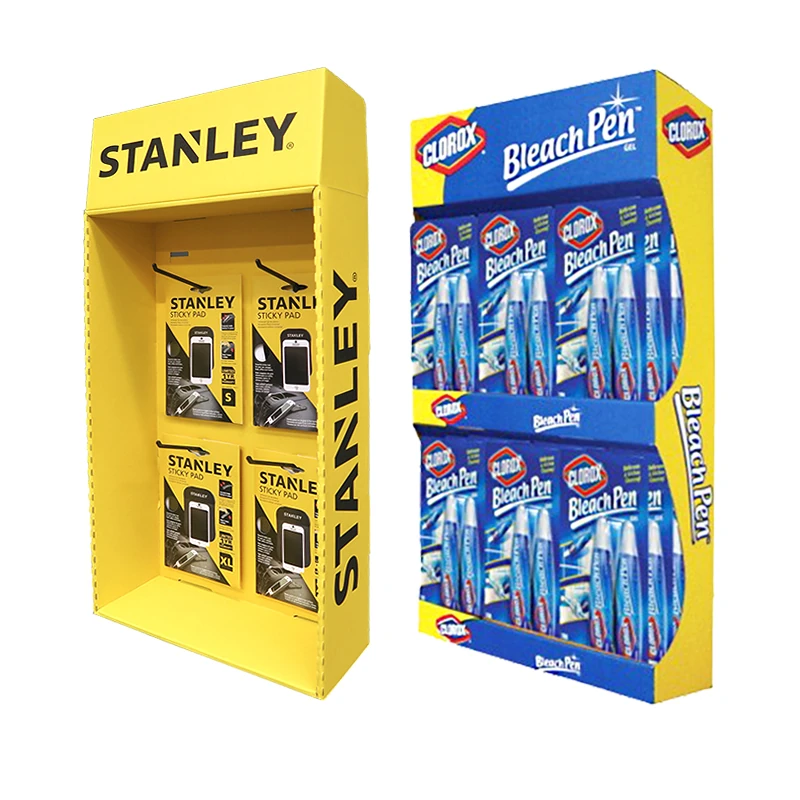
Our team solves three core troubles for US retail stores: messy piled small daily goods, low wall space usage and weak display marketing effect in stores. We create exclusive wall racks with hooks to fix these problems.
These custom wall racks are light, strong to carry weight, easy to install, cost-effective, fold flat for sea shipping, recyclable and create tidy store displays. They work perfectly for daily sales and promotion activities in American supermarkets and convenience stores. These racks help overseas customers upgrade store brand images and sell more goods, win full trust from these US customers, and lay a solid foundation for long-term stable cooperation.