

The Future of Corrugated Cardboard POP Displays
By Shenzhen Topwon Group Co.,Ltd
Aug 13, 2022
Retail is changing quickly. Brands need to gain attention in increasingly crowded stores, retailers need displays that are easy to deploy, and both sides are under pressure to reduce unnecessary material, shipping volume and store labor.
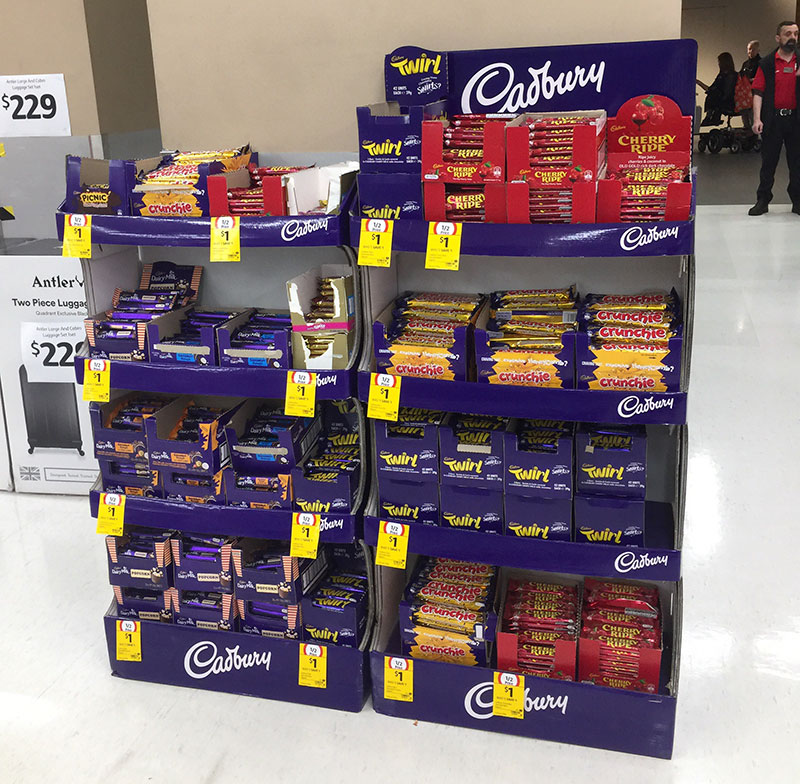
This is why the future of corrugated cardboard POP displays is not simply about making a display look more attractive. It is about creating retail solutions that are more efficient, more adaptable, more engaging and more responsible from design through end-of-campaign recovery.
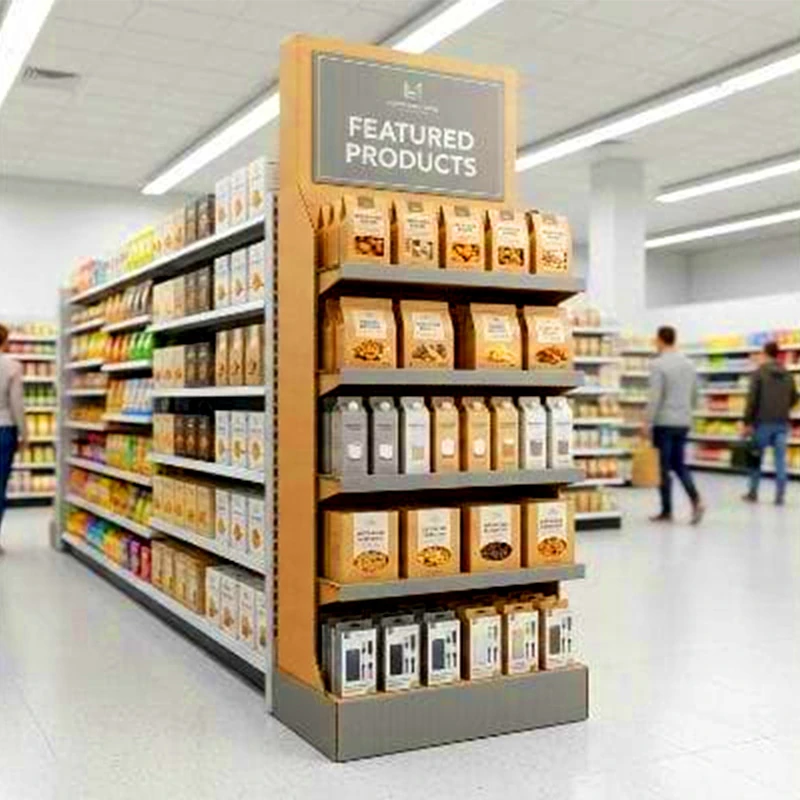
POP means Point of Purchase. A corrugated cardboard POP display is a branded retail merchandising unit placed near the buying point—such as an entrance, promotional aisle, endcap or checkout area—to improve product visibility and support purchase decisions.
“The future of POP displays is not just display design. It is the integration of product presentation, retail logistics, brand storytelling and responsible material choices.”
For product launches, supermarket promotions, seasonal retail programs and fast-moving consumer goods, corrugated displays can offer a practical combination of printed branding, structural flexibility, low shipping weight and campaign-specific customization. The strongest future-ready displays, however, will be designed around the full retail journey—not only around appearance.
Why POP Displays Still Matter in Future Retail
E-commerce has changed the way many consumers research products, but physical retail remains an important place for product discovery, comparison and immediate purchase. In-store displays help a brand compete for attention at the exact moment shoppers are deciding what to buy.
Corrugated POP displays are becoming more important because brands need a flexible way to support:
- New product launches
- Limited-edition campaigns
- Seasonal promotions
- In-store sampling and demonstrations
- Retailer-specific promotions
- Bundle offers and cross-selling
- Omnichannel campaigns that connect physical and digital experiences
- Retail-ready product distribution
The future is not necessarily about replacing every permanent fixture with cardboard. Instead, it is about using the right display material and structure for the right campaign, product load, retail environment and expected display life.
| Retail Need | How Future-Ready Corrugated Displays Can Help |
|---|---|
| Faster campaign launches | Custom structures and print graphics can be developed for specific products and promotional windows |
| More frequent product refreshes | Campaign-specific graphics and structures can be changed without rebuilding permanent fixtures |
| Better in-store visibility | Large graphic surfaces, headers and retail placement help products stand out |
| Lower store labor | Pre-assembled, pre-filled or retail-ready formats can simplify deployment |
| More efficient shipping | Flat-pack or optimized pack-out designs can reduce shipment volume |
| Sustainability goals | Material choices can be designed to support recovery and lower mixed-material content |
| Omnichannel engagement | QR codes and digital touchpoints can connect shelf activity to online content |
Industry discussion around corrugated POP displays increasingly focuses on the combination of sustainability, personalization, retail-ready convenience and technology-enabled shopper engagement.
Trend 1: Sustainable Design Will Become More Specific
The future of cardboard POP displays will not be defined by broad claims such as “eco-friendly” or “100% green.” Buyers, retailers and brand sustainability teams increasingly expect more precise material information.
A future-ready display should consider:
- Recycled-content board options
- Responsibly sourced paper options, where applicable
- Water-based ink options
- Reduced use of difficult-to-separate plastic and metal components
- Low-film or recyclable-compatible coatings where appropriate
- Structures designed to use material efficiently
- Flat-pack designs that can reduce shipping volume
- Clear end-of-campaign disposal or recovery guidance“Sustainability is not a label added at the end of a project. It is a design decision made at the beginning.”
What to avoid
Avoid making unsupported claims such as:
- “Completely eco-friendly”
- “No oil or gas is used”
- “Fully recyclable in every market”
- “Better than plastic in every application”
- “Waterproof cardboard display”
- “Zero environmental impact”
The real environmental performance of a display depends on its board, coatings, inks, glue, plastic or metal additions, transport method, usage period and local recycling infrastructure. A display with heavy lamination, mixed materials or difficult-to-separate attachments may not fit the same recovery pathway as an all-paperboard structure.
Corrugated design can contribute to sustainability objectives when board choice, print process, coatings, packaging and end-of-life considerations are planned together.packagingcorp+1
Trend 2: Flat-Pack, Pre-Filled and Retail-Ready Solutions
Future retail displays will increasingly need to serve two jobs at once:
- Protect products during shipment.
- Help products reach the sales floor quickly.
This is where retail-ready display packaging and display shippers become increasingly valuable. Instead of sending products in standard cartons and requiring store teams to unpack, arrange and merchandise every unit separately, a display can be designed to move from logistics to retail with fewer handling steps.
| Format | How It Works | Best Use Case |
|---|---|---|
| Flat-Packed Display | Components are packed efficiently and assembled at the destination | Campaigns where shipping volume is a priority |
| Partially Assembled Display | Key structures are pre-built; final assembly is limited | Retail programs needing faster setup |
| Fully Assembled Display | The display arrives ready for placement | Projects with limited in-store labor availability |
| Pre-Filled Display Shipper | Products are packed into the display before shipping | Fast deployment for retail promotions |
| Pallet Display | Products are merchandised on a pallet-compatible unit | Bulk sales, warehouse retail and supermarket campaigns |
| Shelf-Ready Tray / PDQ | Shipping tray converts into a shelf display | Fast-moving products and easy replenishment |
The best option depends on shipment distance, retailer requirements, labor availability, product protection needs and display complexity. A fully assembled display may reduce store setup time but use more shipping volume. A fully flat-packed display may save freight space but require more field assembly. The goal is to find the right balance.
“A display is successful only when it arrives safely, is deployed correctly and performs on the retail floor.”
Current retail and corrugated packaging discussions emphasize lighter boards, flat-pack efficiency, retail-ready formats and structures that bridge warehouse handling with in-store merchandising.bay-cities+2
Trend 3: More Modular and Adaptable Structures
Retailers change layouts, promotions and product assortments frequently. As a result, one fixed display design may not suit every store, product size or campaign.
The future of corrugated POP displays will involve more modular design systems, including:
- Interchangeable header cards
- Replaceable printed panels
- Adjustable shelf heights
- Modular trays for multiple SKU configurations
- Stackable display sections
- Detachable side units
- Multi-product bundle displays
- Standardized base structures with campaign-specific graphics
Why modularity matters
| Business Challenge | Modular Display Response |
|---|---|
| Different products need different shelf spacing | Adjustable shelf or tray design |
| A campaign changes by season | Replaceable graphics or header panel |
| Retailers have different footprint rules | Adaptable width, depth or side-unit configuration |
| Multiple SKUs need one display | Modular dividers and interchangeable trays |
| A brand wants to reuse a design platform | Standard structural base with updated artwork |
| The product portfolio changes | Flexible capacity and product-facing layout |
Modularity does not mean every display should be complicated. A good modular system should still be simple enough for production, packing, store assembly and recycling planning.
Trend 4: Digital Touchpoints Will Connect Store and Online
The future of retail is increasingly hybrid. A shopper may see a product in store, scan a code, watch a product video, compare colors or variations online, join a loyalty program or share a promotion through social media.
Corrugated POP displays can support this connection without needing to become electronic devices themselves.
Simple digital integrations
- QR codes linking to product information
- QR codes linking to campaign landing pages
- “How-to” videos
- Product registration pages
- Store locator tools
- Digital coupons
- Loyalty-program sign-up pages
- Social media campaign pages
- Product review pages
- Brand storytelling or ingredient information
More advanced possibilities
- Near-field communication tags where appropriate
- Small integrated digital screens for selected high-value campaigns
- Augmented-reality product demonstrations
- Digital sampling registration
- Dynamic promotional codes
- Retail-media tracking through unique campaign URLs“The display can be the starting point of a customer journey, not the final point.”
Digital integration should be purposeful. A QR code that leads to a generic homepage may create little value. A code that opens a product tutorial, product comparison, coupon or campaign-specific landing page is more likely to support a measurable customer action.
Industry outlooks for POP displays identify digital integration, including QR codes and interactive elements, as a major direction for connecting physical displays with online retail experiences.cyecsa+2
Trend 5: Better Structural Engineering, Not Just Better Graphics
The future display must still do the basic job well: hold products safely, stay stable, support restocking and survive the retail environment for the required campaign duration.
A visually strong display can fail if it has:
- Insufficient shelf strength
- An unstable base
- Poor product fit
- Too little space for replenishment
- Difficult assembly
- Inadequate transport protection
- Graphics that become damaged too quickly
- Weak performance in humid conditions
Design information needed before production
| Information | Why It Matters |
|---|---|
| Product dimensions | Determines tray size, shelf spacing and display footprint |
| Product unit weight | Determines board grade, shelf support and base strength |
| Products per display | Determines total loading requirement |
| Number of SKUs | Determines dividers, trays, graphics and product organization |
| Retail location | Determines visibility, access, space limits and durability needs |
| Campaign duration | Determines structural and finish requirements |
| Store assembly method | Determines locking design, instructions and pre-assembly level |
| Shipping destination | Influences packaging, transport protection and moisture considerations |
| Retailer requirements | May define dimensions, pallet rules, barcodes and safety standards |
“Great graphics attract attention. Reliable structure earns retailer confidence.”
The growing focus on retail-ready performance means structural design must account for material thickness, fold allowances, load capacity, shipping conditions and assembly requirements.
Trend 6: Print Will Become More Targeted and More Personalized
Brands are increasingly moving away from one generic retail message for every market. Future POP display programs may use more targeted artwork for:
- Different retailers
- Different countries or languages
- Regional events
- Seasonal campaigns
- Product launches
- Limited editions
- Local promotions
- Consumer segments
- Co-branded campaigns
| Printing Approach | Suitable For | Key Advantage |
|---|---|---|
| Large-Scale Standard Artwork | High-volume national or international programs | Efficient consistency across many locations |
| Retailer-Specific Artwork | Promotions for named retail chains | Better alignment with retailer campaigns |
| Regional Artwork | Local language, culture or market needs | Improved relevance for local shoppers |
| Seasonal Artwork | Holidays, events and annual promotions | Fast visual refresh |
| Small-Batch Promotional Artwork | Product trials and market testing | Flexibility before larger rollout |
| QR-Enabled Artwork | Omnichannel promotional programs | Connects physical display to digital content |
The objective is not personalization for its own sake. It is to make a display more relevant to the retailer, the retail environment and the shopper.
Trend 7: POP Displays Will Be Measured by Retail Performance
In the past, display decisions could be driven mainly by price, appearance and production lead time. In the future, brands and retailers will increasingly evaluate displays based on broader operational performance.
Future-ready KPI categories
| Category | Questions to Ask |
|---|---|
| Visibility | Can shoppers notice the display quickly? |
| Capacity | Does the display hold enough products for the planned sales period? |
| Stability | Does it remain safe and presentable under actual loading conditions? |
| Assembly | How long does setup take, and can store staff do it correctly? |
| Replenishment | Is restocking simple and intuitive? |
| Shipping | Is the display protected and space-efficient in transit? |
| Retail Compliance | Does it fit retailer dimensions, safety rules and pallet requirements? |
| Material Recovery | Can the design support the intended disposal or recycling pathway? |
| Digital Engagement | Are QR scans, coupon actions or landing-page visits measurable? |
| Campaign Results | Did the display support sell-through, product trial or shopper engagement? |
Not every campaign needs every metric. A simple counter display may only need to be attractive, compact and easy to replenish. A large retailer promotion may need a more detailed plan for shipment, palletization, store setup, campaign timing and performance tracking.
What This Means for Retailers and Brands
The future of corrugated POP displays is not one standard design. It is a more disciplined design process that starts with the commercial objective.
Before developing a display, ask:
- What should the shopper notice first?
- What action should the shopper take?
- How many products must the display hold?
- Where will the display be placed in the store?
- How long will the campaign run?
- Who will assemble and replenish it?
- How will it be shipped and delivered?
- What materials and end-of-campaign requirements apply?
- Does the campaign need a digital connection?
- How will success be measured?
The answers will guide the choice between a countertop display, floor display, pallet display, dump bin, endcap unit, sidekick, display shipper or shelf-ready tray.
Customer Feedback
The following comments are quoted from publicly displayed buyer feedback on Alibaba.com. Buyer names are withheld where they are not publicly disclosed.
“Arrived on time, great support.”
— Verified Alibaba.com buyer, United States. 5-star review; supplier service and on-time shipment rated “Very satisfied,” August 2026.
“Great product, excellent support from staff.”
— Verified Alibaba.com buyer. 5-star review for a custom cardboard retail display project
“Thanks, looking forward to our second collaboration :)”
— Topwon’s public response to a buyer review, August 2026.
These comments describe individual buyer experiences. Project outcomes may vary depending on product specifications, display complexity, order quantity, delivery destination, shipment method and retail requirements.
Building the Next Generation of Retail Displays
Corrugated cardboard POP displays will continue to play an important role in retail because they can adapt to fast campaign cycles, changing product portfolios, store-level constraints and evolving sustainability expectations.
The displays most likely to succeed in the future will be designed to do more than look good. They will be:
- Structurally reliable
- Easy to ship and deploy
- Designed for real retail conditions
- Appropriate for the product load and campaign duration
- Adaptable across retail formats
- Clear in brand communication
- Thoughtful about material choices
- Connected to relevant digital experiences when useful
- Measurable against business and retail goals“The future of corrugated POP displays belongs to solutions that combine creativity with operational discipline.”
If you are planning a supermarket promotion, retail product launch, seasonal campaign or custom in-store display program, start with your product dimensions, weight, display capacity, target retail environment, campaign duration and shipment requirements.
A well-planned corrugated POP display can help turn a product shipment into a retail experience.
Request a Custom Corrugated POP Display
Looking for a future-ready custom display solution for your next retail campaign?
Send us the following information:
- Product dimensions and unit weight
- Product quantity per display
- Display type or preferred retail location
- Number of SKUs
- Campaign duration
- Target retail market
- Estimated order quantity
- Artwork status
- Packing requirement
- Delivery destination
We can help develop custom solutions including:
- Cardboard floor displays
- Countertop POP displays
- Corrugated dump bins
- Pallet displays
- Endcap displays
- Sidekick and power wing displays
- Display shippers
- Shelf-ready packaging
- Custom retail promotional displays
The Future of Corrugated Cardboard POP Displays shows successful retail displays depend on more than attractive graphics. Sustainable materials, modular‑adaptable structures, digital shopper connections and solid structural engineering create high‑value, campaign‑ready solutions for modern physical retail. Brands should start with real‑world retail requirements rather than only visual design to get better in‑store results.
Contact Topwon to discuss your next corrugated cardboard POP display project.
And like all POP displays, contact us can customize the look and feel of each one to perfectly fit your brand. So why wait? Contact us at [email protected]or +86 18826511597 today to get started!
Previous Article
How Custom Corrugated Displays Can Benefit Your Retail Strategy

Next Article
Congratulations! Topwon Passed SGS Certification
Trusted by These Featured Clients