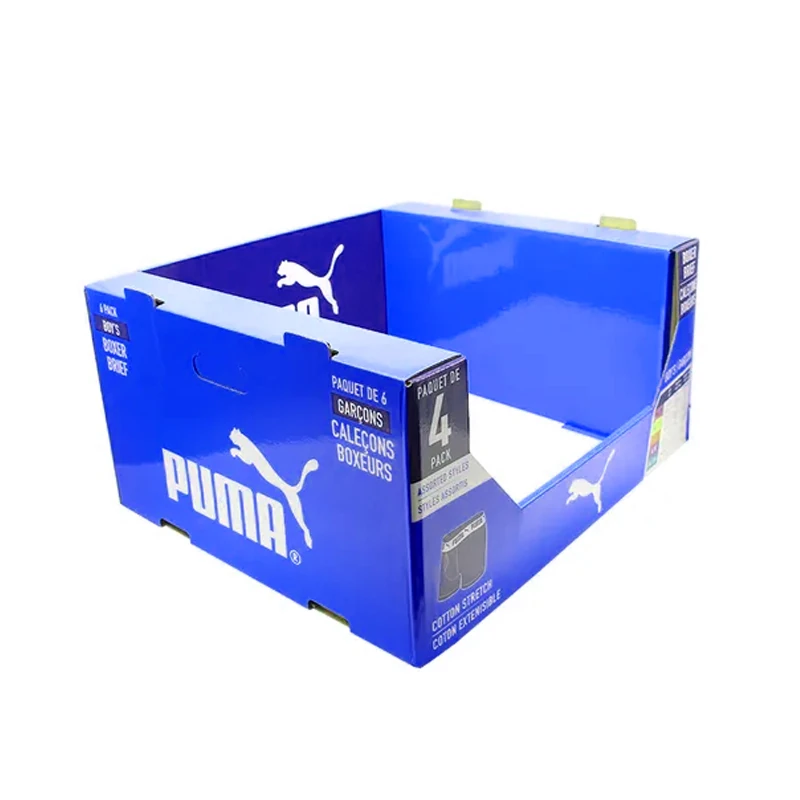
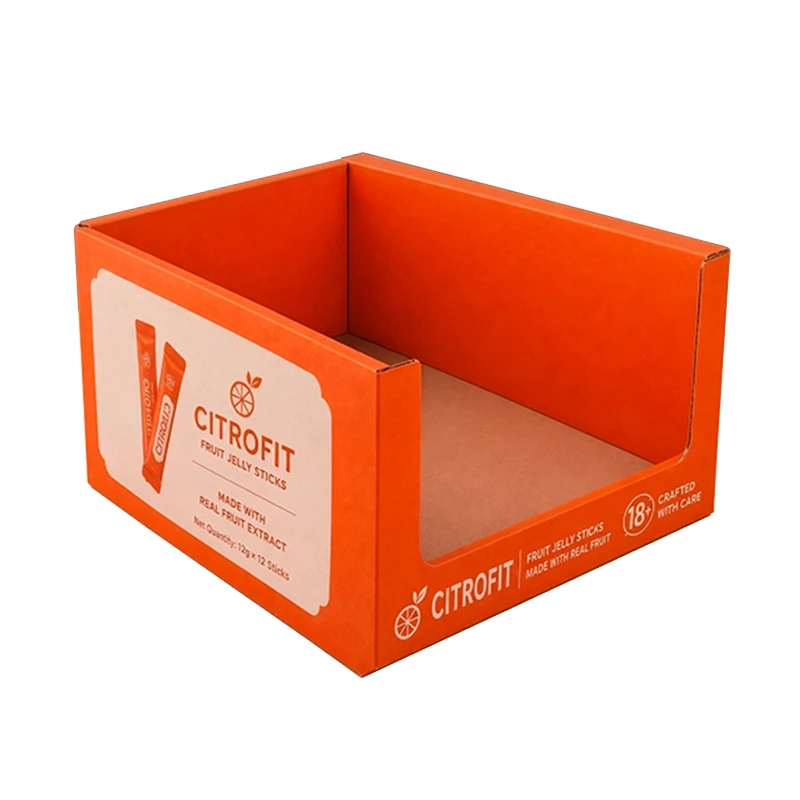
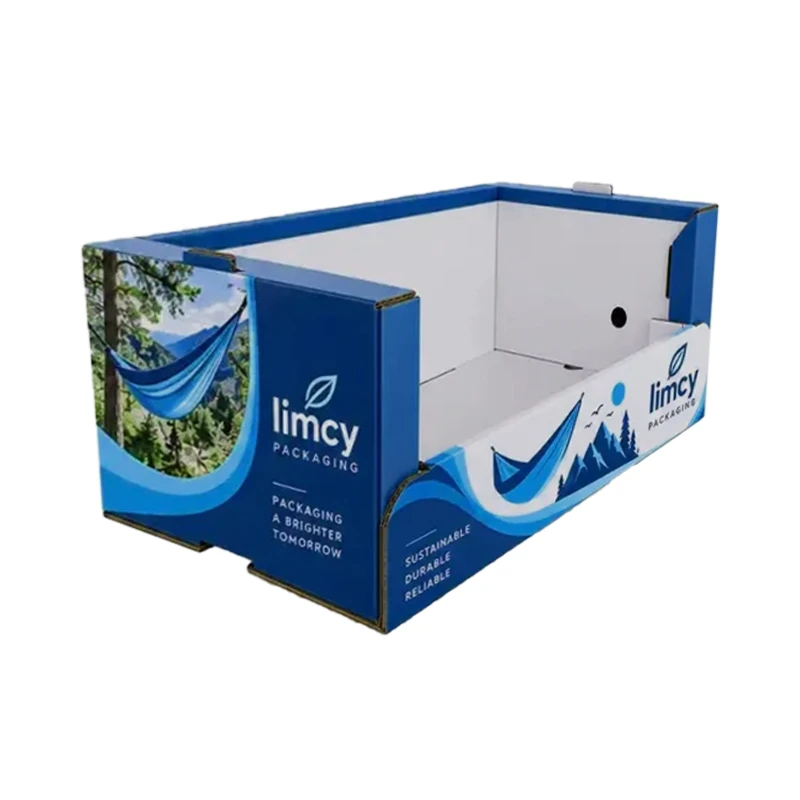
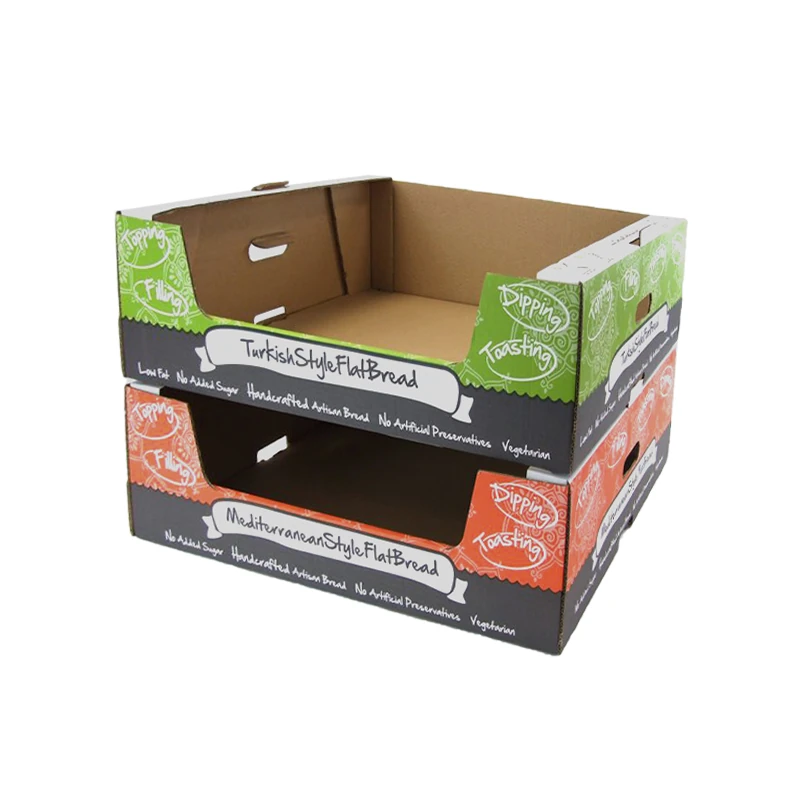
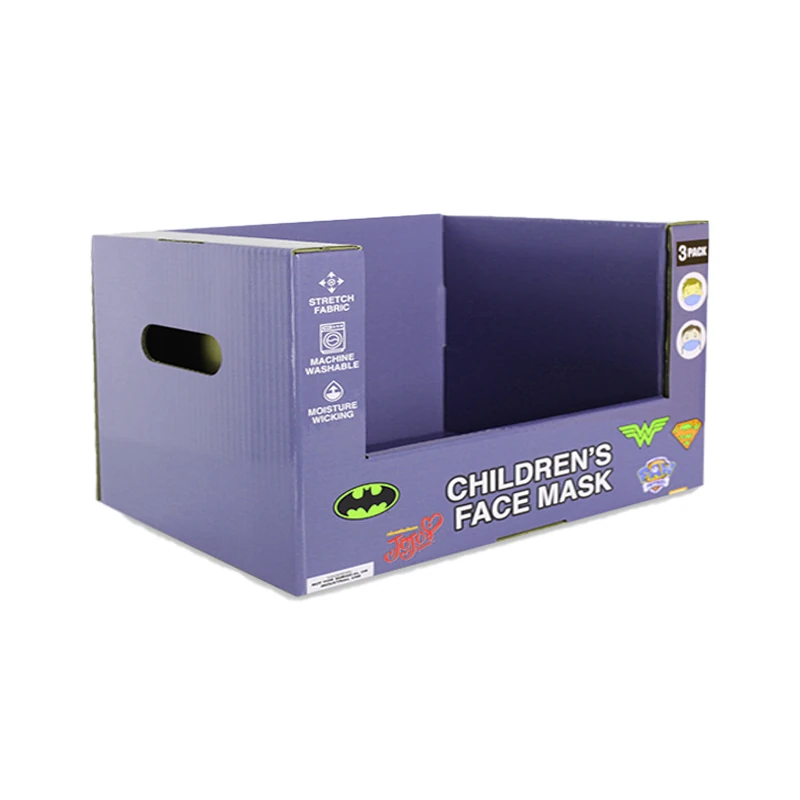
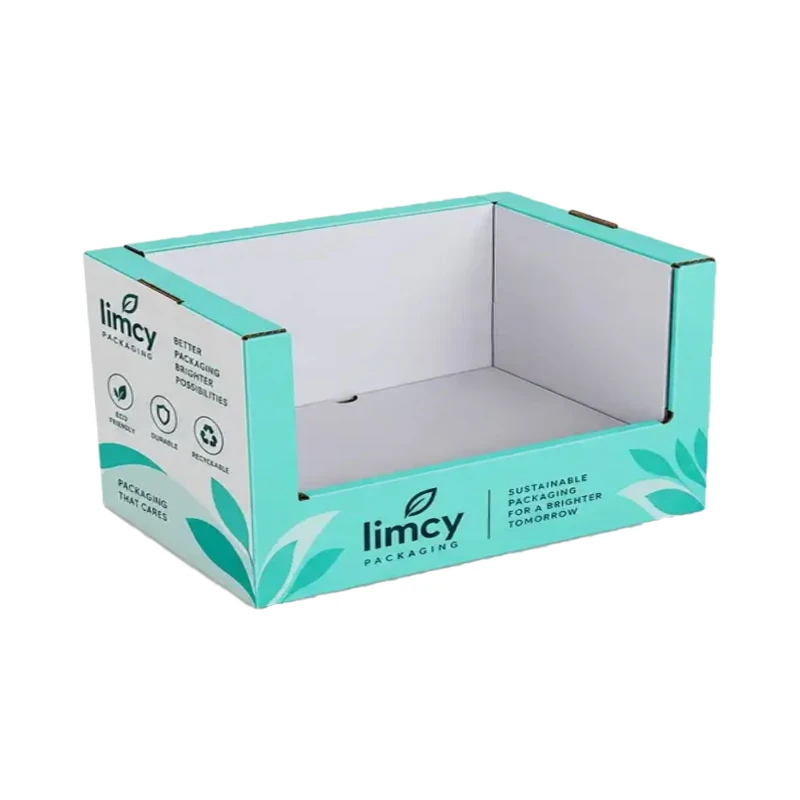
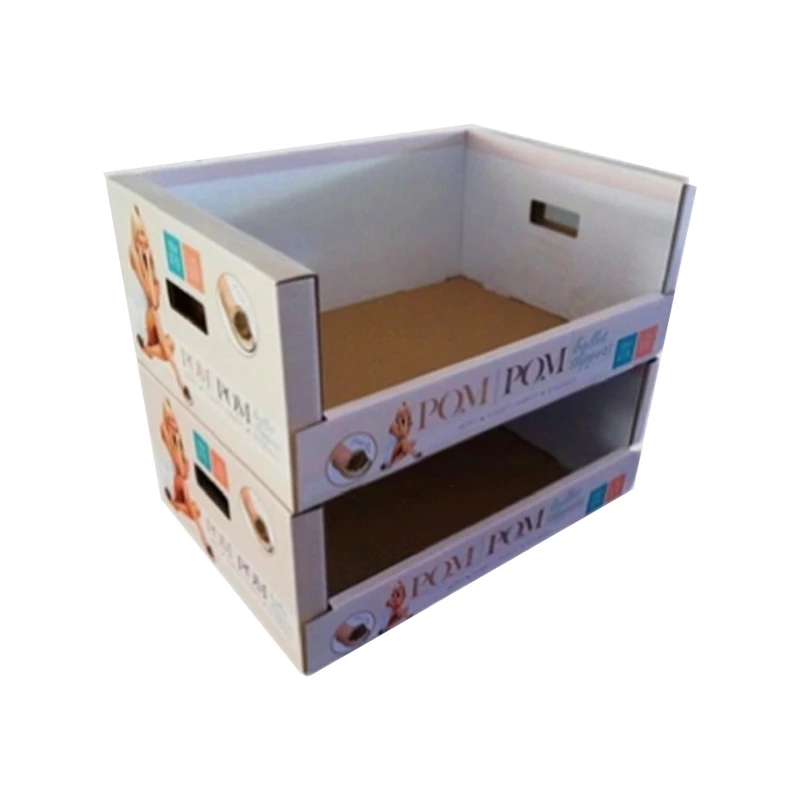
Keep products organized and create a branded retail presentation with custom cardboard PDQ and shelf-ready packaging trays.
Topwon provides custom cardboard display and retail packaging services, covering design, printing, manufacturing, and distribution. Start with your product dimensions, packing requirements, and retail placement to discuss a tray structure for your project.
Whether you need an open display tray or packaging that converts from a closed case into a shelf display, define the shipping and merchandising requirements together—not as separate decisions.
What Are Cardboard PDQ and SRP Trays?
PDQ, commonly expanded as “Pretty Darn Quick,” describes displays intended for quick retail setup. A cardboard PDQ tray holds a group of products for presentation on a shelf, counter, or another display fixture.
SRP stands for shelf-ready packaging. Its purpose is to let products move from secondary packaging to the retail shelf with limited individual handling. Depending on the structure, staff may remove a hood, lift off a lid, or tear away a panel before placing the tray on the shelf.
The terms overlap, but they do not specify an identical construction. A tray may be supplied empty for later filling, while a shelf-ready pack may be designed to travel with the products inside. Confirm the intended packing method when requesting a quotation.
Format
Main Function
What to Specify
Open PDQ tray
Groups products for an accessible retail presentation
Shelf footprint, product arrangement, and filling location
Tray with a removable hood
Combines a display tray with a separate protective cover
Hood removal, product retention, and outer packing
Tear-away SRP case
Opens along a defined section to reveal the display tray
Opening method, remaining tray strength, and visible graphics
Removable covers and tear-away sections are established options within shelf-ready packaging; the suitable structure depends on the product and distribution requirements.
Choose a Tray Structure Around Your Products
Start with how the products need to be presented and handled. A reference design helps communicate appearance, but the final structure should be reviewed against the actual merchandise.
Open-Top PDQ Trays
An open-top tray gives shoppers access to the products while the front and side panels provide space for branding. This format appears in counter and shelf display ranges for packaged snacks, cosmetics, supplements, and other small products.
For your design brief, specify:
The number of products across the front.
The number of rows behind each facing.
Whether different flavors, shades, or sizes need separation.
The maximum available shelf width, depth, and clearance.
Also clarify where the tray will be filled: at your facility, by a packing partner, or in the store.
Trays with Removable Hoods
A tray-and-hood design separates the display section from the cover. The hood is removed for merchandising, leaving the products in the tray. Suppliers offer this structure for products such as snack bars and other packaged retail goods.
Include these questions in the development brief:
How will the hood be secured and removed?
Must it be removed without tools?
Do the products need internal dividers?
Will the unit travel inside a master carton?
Which surfaces need identification or handling instructions?
The tray, hood, inserts, and outer packing should be reviewed as one packaging system.
Tear-Away Shelf-Ready Packaging
A tear-away case uses a removable section to convert the closed pack into a retail display. The opening must expose the products without damaging the part of the tray that remains on the shelf.
For this design, request a physical opening demonstration. Check the appearance of the torn edge, the condition of the printed panels, and whether the products remain accessible after opening.
Divided Product Layouts
Dividers or fitted inserts can be included to organize products within a display. They are used in PDQ structures to help maintain product positions and separate items.
When discussing a divided layout, provide every product variant—not just the largest pack. Confirm how store staff will identify each position and refill it after products are sold.
Use the reference to explain your preferred design direction, then provide the details needed to assess a new project:
Project Detail
Information to Provide
Product
Packaged product photos or samples
Dimensions
Length, width, and height of each retail unit
Weight
Filled weight per unit
Capacity
Products per tray and number of product variants
Placement
Shelf, counter, or another fixture
Packing
Empty trays or a product-filled packaging system
Graphics
Logo, artwork, colors, and required information
Delivery
Quantity, destination, and required arrival date
Do not assume an existing model will fit a different product without adjustment. Ask for the proposed dimensions and layout to be confirmed during sampling.
Plan the Tray for the Product Category
A similar-looking tray can require a different layout when the packaging changes. Use the product category as a starting point, then confirm the details with your actual packs.
Snacks and Confectionery
For bars, sachets, pouches, and small cartons, specify how products should face the shopper. Tell the supplier whether the tray will contain one flavor or a mixed selection.
Check whether flexible packs remain in their intended positions when the tray is partially empty.
Cosmetics and Personal Care
For lipstick, skincare, nail polish, or travel-size products, identify the number of shades or variants and whether testers need separate positions.
Topwon also offers cosmetic display products, which can provide additional references when comparing a simple tray with a more developed counter display.
Healthcare and Small Accessories
For boxed personal-care products, supplements, or small accessories, include the information that must remain visible after loading.
List any label, barcode, batch, or expiry-date visibility requirements supplied by your retail partner. Mark these positions on the artwork and sample for review.
Customize the Structure and Printed Presentation
Topwon’s service scope includes structural design, printing, and cardboard display manufacturing, allowing the tray and its graphics to be discussed within the same project.
Prepare the following requirements before design approval:
Customization Area
Details to Discuss
Tray dimensions
Product fit and available retail space
Front and side walls
Product retention, visibility, and access
Interior layout
Rows, compartments, dividers, or inserts
Opening structure
Open tray, removable hood, or tear-away section
Board specification
Proposed material and project-specific performance requirements
Printed panels
Branding and information visible before and after opening
Packing method
Flat, assembled, or intended for filling at a separate facility
Design the Graphics for the Opened Tray
A closed pack and an opened display do not show the same surfaces. Branding placed only on the removable cover disappears when that cover is discarded.
Review the open-display artwork as well as the closed-pack artwork. Identify where the brand name, product description, and any shopper-facing message will remain visible.
For a shelf display, also check that a header or raised back panel will fit within the available clearance.
Check the Sample Before Production
A digital rendering communicates appearance. A physical sample helps review fit, opening, handling, and the loaded presentation. Competitor manufacturing guides also place structural prototypes and sample approval before mass production.
Use the sample review to check:
Product fit
Load the intended quantity using the actual retail packs.
Handling
Review how the filled tray will be lifted, moved, and placed.
Opening
Test any removable hood, lid, or tear-away panel.
Shelf fit
Check the external dimensions against the allocated retail space.
Shopper access
Remove products from different positions and inspect the remaining layout.
Printed information
Review graphics, required labels, and barcode positions.
Transport packaging
Agree on the relevant checks for the proposed packing and distribution route.
Approve the tray as it will be used—with products loaded and the retail opening completed—not only as an empty printed sample.
If the project is for a named retail chain, provide its current packaging requirements before final approval. Do not treat a supplier’s general online guide as the retailer’s official specification.
Decide How the Trays Will Be Supplied
Clarify the handover point between display manufacturing and product packing.
An empty tray order is different from a product-filled retail-ready shipment. The quotation should state who assembles the trays, who fills them, and who provides the protective outer packaging.
Discuss:
Whether trays should arrive flat or assembled.
Where products will be loaded.
Whether assembly instructions are needed.
How trays will be grouped into cartons.
Whether a protective hood or outer shipper is required.
Who is responsible for final packed-product approval.
Flat or partially assembled supply and product-filled display systems involve different workflows; PDQ manufacturers describe both approaches.
Why Work with Topwon?
Topwon manufactures custom cardboard displays and retail packaging, with services covering design, printing, production, and distribution. Its website also lists free design, free samples, and door-to-door delivery services.
For a PDQ or SRP tray project, use that service scope to discuss both the retail presentation and the packaging requirements from the beginning.
Share a reference style if you have one, but include your product specifications and retail constraints so the proposal can be developed around your project.
Request a Custom PDQ or SRP Tray Quote
Tell Topwon what you need to display, where it will be sold, and how the products will reach the store.
Send your product specifications, preferred tray style, order quantity, and delivery requirements to Topwon to discuss the structure, sample, printing, and packing arrangements for your project.
Are PDQ trays and SRP trays the same?
They are related terms, but they do not guarantee the same structure. PDQ generally emphasizes quick display setup, while SRP emphasizes packaging that supports efficient shelf replenishment. Confirm whether your project requires a display-only tray or a system designed to travel with products inside.popdisplay+2
Can a cardboard display tray also be used for shipping?
Some trays are developed as part of a shipping-and-display system, using a hood, outer carton, or other protective components. An open tray alone should not be assumed suitable for transport without reviewing the complete packed configuration.popdisplay+1
How much weight can a tray hold?
Specify the filled weight per product and the total quantity per tray. Request a structure and material proposal for that load, then confirm performance through the agreed sample and testing process rather than relying on a generic capacity figure.popdisplay
Can the tray include separate product compartments?
Dividers and inserts are options used in PDQ designs. Provide the dimensions and quantity of each product variant so the proposed arrangement can be reviewed.oneplusdisplay
What is the price of a custom tray?
Ask for a project quotation based on the dimensions, structure, board specification, graphics, quantity, and packing requirements. These variables affect the quotation, so compare proposals using the same specification.packagingvista
What should I send to request a quotation?
Send product dimensions, filled weights, quantity per tray, order quantity, available retail space, reference images, artwork requirements, and delivery details. Include the latest retailer packaging specification if applicable.