

Custom Corrugated Cardboard End-Cap Display rack for Beverage Supermarkets Case
I. Project Overview and Confidentiality Statement
This commercial landing project is led by Project Leader Wendy with one-on-one project follow-up, serving the summer marketing promotion campaign for a domestic medium-sized beverage brand.

In compliance with the commercial confidentiality agreement signed by both parties, this report adopts anonymization and desensitization processing for confidential information, including the full official brand name of the client, proprietary partner systems, and exclusive marketing data. All images presented in this report serve only as structural and process effect reference samples, not on-site project photographs, and do not involve any disclosure of trade secrets.
The core landing objectives of this project are to develop lightweight, reusable, and rapidly deployable exclusive point-of-purchase display rack for the brand’s new sparkling water product line, achieve standardized merchandise placement across 1,200 retail stores, and support the 12-week short-term summer marketing and promotion cycle. Previously, the brand predominantly relied on rigid fixed display racks made of plastic and acrylic, which exhibited poor adaptability for short-term seasonal promotion scenarios. These conventional fixtures presented a series of operational pain points, including high overall costs, prolonged lead times, dormant inventory waste, and difficult in-store implementation, which significantly hindered new product rollout efficiency and terminal merchandising performance.
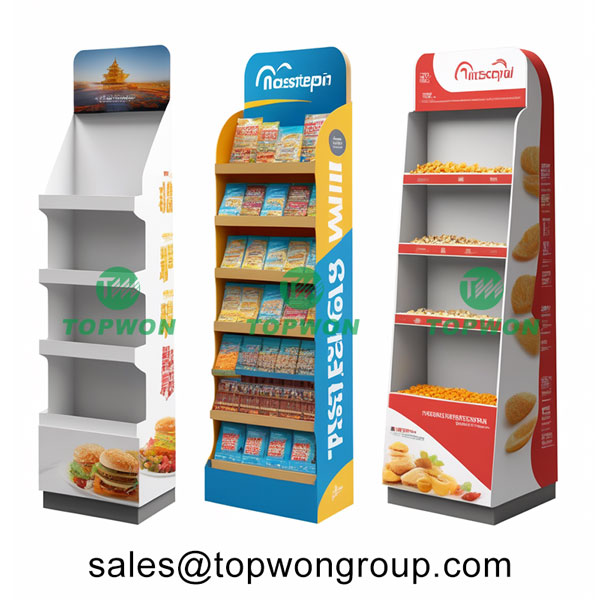
This customized corrugated cardboard end-cap display solution is designed to fully replace traditional rigid display fixtures across four key dimensions: cost efficiency, timeliness, on-site deployability, and environmental sustainability, so as to optimize the terminal exposure and sales performance of new products.
II. Core Pain Points and Project Constraints of the Original Display Solution
Based on the brand’s years of offline promotion experience, traditional fixed display fixtures fail to meet the requirements of this short-term, large-scale, and highly flexible summer new product promotion campaign. The core pain points are concentrated in four points:
1. Poor Cost Performance of Marketing Investment
First, the marketing investment is low in cost performance. The unit purchase price of traditional plastic and acrylic display props is as high as $ 120-150 in a single store, and the overall investment in large-scale distribution of goods in a thousand stores is huge, and the budget occupancy rate is high. For short-term promotion activities within three months, the input-output ratio is extremely uneconomical.
2. Delayed Production and Delivery Cycle
Second, the production delivery time lag. Hard display stands need to go through complicated processes such as mold opening, injection molding, finishing and assembly. The normal production cycle takes 8-12 weeks, which is almost equivalent to this complete promotion cycle. It can’t meet the core demand for new products to be launched quickly and seize the peak season traffic, and it is easy to miss the best sales window period.
3. Severe Waste of Logistics and Storage Resources
Third, logistics storage resources are seriously wasted. The traditional finished product display rack has high self-weight, large volume, inability to be folded and compressed, and high logistics and transportation costs; Moreover, after the promotion, props have no reuse scene, so they can only be left idle for a long time, occupying storage space continuously, resulting in invalid asset waste.
4. High On-Site Implementation Resistance in Terminal Stores
Fourth, the terminal store has great resistance to landing. The assembly process of hard props is complicated, requiring special tools to cooperate with many people, which is time-consuming and laborious, and the cooperation of store operation and maintenance personnel is low, which directly leads to uneven display landing, unstable shelf rate and uneven scale promotion effect in stores across the country.
At the same time, there are hard landing constraints in this project: the overall promotion cycle is only 12 weeks, the marketing budget is strictly controlled, the visual and specifications of thousands of stores in the country need to be unified, and the props need to be completely recycled after the promotion, which meets the standardization requirements of super green retail.
III. Integrated Solution for Customized Corrugated Cardboard Paperback Endcap Display
Combining the actual pain point of the brand and the landing scene of supermarket terminal, Wendy co-ordinates the design, production and landing full link team to finalize the customized end frame scheme of foldable paperback corrugated board. Abandon the solidification defects of traditional props, and do scene customization optimization from four dimensions: structural load-bearing, functional adaptation, visual presentation and terminal landing to accurately match the short-term large-scale distribution needs of FMCG.
1. Material Selection and Structural Reinforcement Design
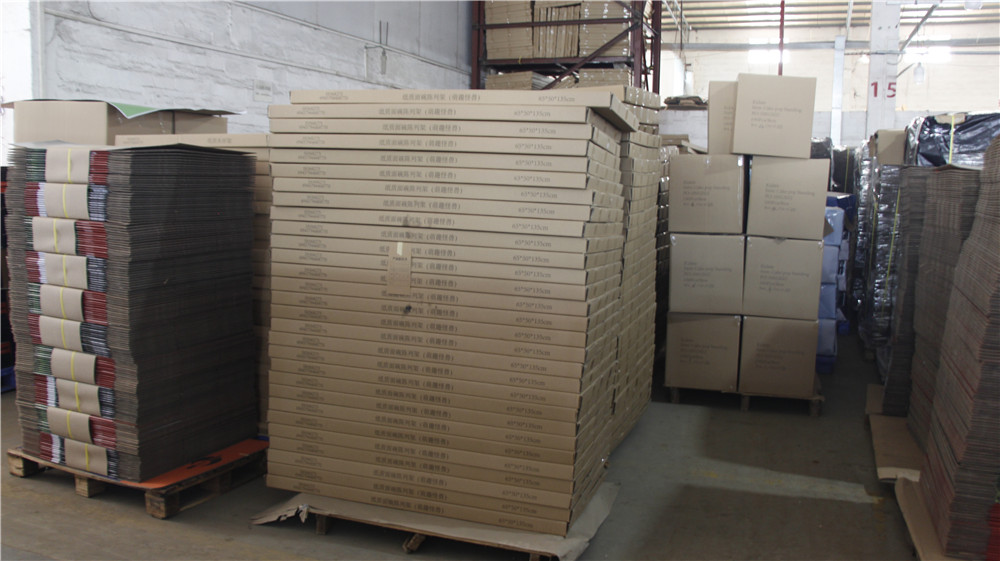
In order to balance the three core requirements of light weight, high load-bearing and wear resistance, the main frame of the display rack is made of BC double corrugated cardboard, which has outstanding compression resistance and deformation resistance, and can adapt to the complex scenes of merchants’ crowded shuttle, frequent replenishment and slight bump. The laminated board adopts the industry-optimized hollow structure of single corrugated folding triangular beam, which can greatly increase the upper limit of single-layer bearing capacity without additional materials and increasing production cost. A single shelf can stably bear 18 pounds of bottled drinks, which is completely suitable for the new product distribution specifications. The overall height of the display rack is controlled at 72 inches, which conforms to the safety standards of supermarket display, and there is no need to install additional fixed accessories, so it is highly versatile. The base adopts the design of full-width bottom plate and concave skirting, which not only solves the problems of sloshing and dumping of display racks, but also resists the collision of forklift trucks in the warehouse and effectively prolongs the service life of props.
2. Functional Version Scene Customization
According to the needs of display, replenishment and transformation of bottled drinks, a four-layer hierarchical structure is customized, and a single set of display rack can regularly accommodate 72 bottles of sparkling water, which perfectly matches the distribution capacity of new products. Aiming at the pain point of complicated replenishment in the store, it is optimized into a front-opening open structure, so that the staff can quickly complete the replenishment of goods without disassembling the cabinet, greatly reducing the workload of store operation and maintenance. The top is equipped with a replaceable magnetic suction head card, which can flexibly change the price tag and activity theme according to the promotion rhythm, without customizing the whole set of props again, thus improving the flexibility and reusability of the scheme. A tearable coupon module is added to the side panel to build an interactive scene for end consumers, which effectively helps offline conversion.
3. Optimization of visual printing process
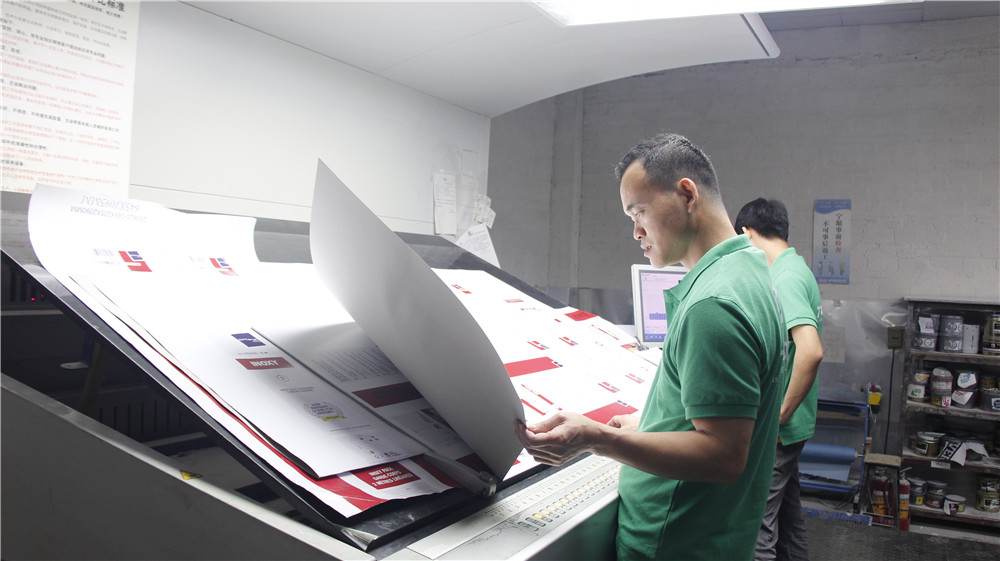
Considering the brand texture and terminal durability, the six-color flexographic printing process with matte wear-resistant protective coating can effectively resist transportation friction and daily display scratch, and ensure the visual integrity of the 12-week promotion cycle. Screen design follows the logic of supermarket’s 3-second visual capture, abandons complicated text piling, focuses on real shooting of high-definition products, distinguishing taste and color, and striking promotion price, with high recognition from a long distance, while avoiding the cheap visual sense of paper props and creating a refreshing and high-end brand display image.

4. Lightweight landing design of terminal
The whole set of props is packed and delivered by paperback compression, relying on the integrated buckle interlocking structure. The whole process can be assembled independently by a single person without glue, screwdriver and other auxiliary tools, and the assembly time of a single set is stably controlled within 10 minutes. In order to solve the problem of store landing difference in China, the project outputs a high-definition graphic assembly manual and a short practical video tutorial to unify the national landing standard, minimize the store operation threshold and ensure the standardization of the display effect of thousands of stores.
IV. Full-Link Implementation Process and Key Time Nodes (Overall Planned by Wendy)
In this project, Wendy will connect customers, design teams, production plants and terminal vendors, accurately control every time node, compress the overall landing cycle and accurately match the short-term promotion rhythm. The complete project promotion timeline is as follows:
1. In-depth Demand Communication and Scheme Confirmation
Deep demand docking and scheme locking (Day 1-3): Wendy actively docked with the customer marketing department, and made clear the core requirements such as display specifications, load-bearing standards, budget red line, 12-week promotion cycle and 1,200 stores’ goods one by one, sorted out the pain points of traditional display landing, and combined with practical experience in the industry, quickly locked the overall landing scheme of customized cardboard end frames.
2. Structural Design, Sample Production and Customer Approval
Structural design, sample proofing and customer finalization (day 4-10): The structural designer is linked to complete modeling, material selection and functional version optimization, and complete sample printing at the same time, and carry out several rounds of actual measurement and debugging for load-bearing stability, assembly convenience and size adaptability, optimize the visual printing scheme, and finally finalize it by the customer.
3. Mass Production and Strict On-Site Quality Control
Factory batch production and quality control landing (11th–16th day): Schedule production as soon as possible after finalization, landing customization processes such as double corrugated reinforcement structure, dull-proof buckle, matte and wear-resistant printing, and follow up production quality control throughout, and investigate problems such as material deformation, printing defects, abnormal buckle fitting, etc. to avoid subsequent transportation and assembly losses.
4. Finished Product Packaging and National Logistics Delivery
Packaging of finished products and national logistics distribution (17th-19th days): 1,200 sets of display stands were mass-produced, packed in paperback, and uniformly sent to the national regional distribution center. It took only 19 days from the finalization of the scheme to the delivery of the first batch of finished products, far exceeding the conventional delivery efficiency of the industry.
5. National Store Rollout and Standardized Implementation
National Store Distribution and Standardization Landing (Day 20-30): After the goods are in place, we will simultaneously promote store distribution, display and construction guidance, land supporting graphic and video tutorials, complete the standardized display of thousands of stores nationwide, help brands complete the comprehensive distribution of new products two weeks ahead of schedule, and seize the golden window period of summer beverage sales.
With Wendy’s meticulous overall planning, the project as a whole landed efficiently, without delay and batch quality control problems. However, in the terminal landing stage, due to the differences in staffing, management mechanism and enforcement of various chain stores, the display effect appears to be layered. In view of the problems existing in some stores, such as overstocked props, misplacement, assembly errors, etc., the team quickly iterated and optimized, upgraded the asymmetric fool-proof buckle structure, avoided installation errors from the design source, and effectively improved the national store display landing qualification rate.
V. Core Project Implementation Effects and Data Reexamination
1. Effective Marketing Budget Control
1. Significantly reduce the investment in brand marketing: the cost of a single set of customized cardboard end frames is only $38, and the unit price is reduced by over 70% compared with the traditional plastic display frames of $120–150. 1,200 stores have been put into operation on a large scale, and the accumulated marketing budget for brands has exceeded 120,000 yuan. The overall project cost is less than one third of the traditional plan, and the cost control effect is outstanding.
2. Optimized Logistics and Warehousing Efficiency
2. The efficiency of logistics and warehousing is greatly optimized: the paperback folding delivery mode greatly reduces the transportation volume, greatly increases the loading capacity of trucks and bicycles, and reduces the overall logistics and transportation cost by about 60%. At the same time, props need not be stored for a long time, which completely solves the pain point of traditional display props being idle and occupying storage resources, and realizes zero invalid inventory waste.
3. Improved Terminal Marketing and Sales Performance
3. The marketing effect of new product terminals has been significantly improved: relying on scientific visual hierarchy and gold display height design, the marketing rate of products in the core visual area of the display rack has increased by 22% compared with that of conventional display. For the stores that are standardized and implemented in place, the overall sales rate of new products can reach 33%-40%, effectively improving the terminal exposure and market penetration of new products.
4. Realized Green and Low-Carbon Closed-Loop Operation
4. Realize green and low-carbon closed-loop operation: After the promotion cycle is over, the cardboard display stand can be directly disassembled and incorporated into the super-standardized cardboard recycling system, with no residual garbage or residual value accumulation, which completely solves the problem that traditional plastic props are difficult to recycle and high in waste, and helps the brand achieve the development goal of green marketing and sustainable retail.
5. Reduced Terminal Store Operation and Maintenance Costs
5. Reduce the operation and maintenance cost of terminal stores: Lightweight design without tools and quick assembly greatly simplifies the store display and construction process, shortens the manual operation time, effectively reduces the store human operation and maintenance cost, and at the same time ensures the standardization of store display nationwide and enhances the unity of brand terminal image.
VI. Project Summary and Industry Practical Experience
This customized project of 1,000-store-level beverage cardboard end frame has verified the absolute advantage of flexible cardboard display scheme in the short-term seasonal promotion scene of FMCG. Compared with the traditional hard display props, the customized corrugated cardboard display stand has multiple core advantages of low cost, quick delivery, easy landing, recyclability and high adaptability, which fully meets the industry demand of short-term listing, rapid iteration and large-scale distribution of new products.
From the practical operation of the project, the terminal display design can not only focus on the practical details such as visual beauty, load-bearing structure, fool-proof design, replenishment convenience, landing adaptability, etc., which directly determines the final effect and marketing transformation of the project. At the same time, the success of large-scale multi-store projects depends not only on high-quality product solutions, but also on the overall planning of the whole process, standardized landing guidance and terminal supervision mechanism, so as to effectively narrow the store implementation gap. In addition, the national bulk distribution project needs to reserve a certain proportion of buffer inventory to deal with slight losses during transportation and assembly, and ensure full coverage of the project and no short board landing.
VII. Scheme Reuse Adaptation Scenario
This customized corrugated board end frame scheme can be widely adapted to the supermarket retail scene of seasonal new products of FMCG in summer/holiday, short-term theme promotion, mass distribution of goods in multiple stores across the country, fine budget control and high-frequency iterative update, and can maximize the display value of terminals and the ability to move products on the basis of strict control of marketing costs, which has high industrial reuse and promotion value.